Pelvic Congestion Syndrome (PCS), also known as a pelvic venous disorder, is a condition associated with enlarged veins and abnormal blood flow in the pelvis. It can cause persistent pelvic pain or a feeling of heaviness in the lower abdomen.
Embolization for Pelvic Congestion Syndrome
What is Pelvic Congestion Syndrome?
Pelvic Congestion Syndrome (PCS), also known as a pelvic venous disorder, is a condition associated with enlarged veins and abnormal blood flow in the pelvis. It can cause persistent pelvic pain or a feeling of heaviness in the lower abdomen.
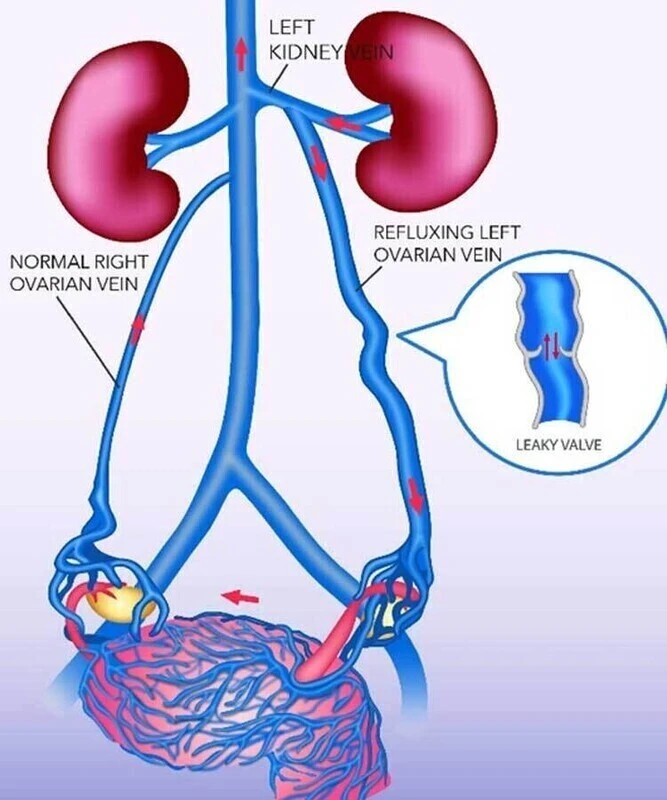
Normally, veins carry blood from the pelvic organs back toward the heart. Small valves inside the veins help keep blood flowing in the correct direction. When these valves do not function properly, blood may flow backward and collect in the veins around the ovaries and pelvis. This can cause the veins to become enlarged, similar to varicose veins in the legs.
PCS is most commonly discussed in women of reproductive age, particularly those who have been pregnant. However, enlarged pelvic veins do not always cause symptoms, and not every case of chronic pelvic pain is due to PCS.
An appropriate medical assessment is important to determine whether abnormal pelvic veins are responsible for your symptoms.
What are the symptoms of Pelvic Congestion Syndrome?
Symptoms can vary from person to person. The most common symptom is persistent or recurring pelvic pain, which may interfere with daily activities.
Common symptoms include:
- Dull, aching, or heavy pain in the lower abdomen or pelvis
- Pelvic discomfort that becomes worse after prolonged standing or sitting
- Pain that worsens toward the end of the day and improves when lying down
- Pain during or after sexual intercourse
- Increased pelvic discomfort before or during menstruation
- A feeling of pressure or heaviness in the pelvis
- Varicose veins around the vulva, buttocks, or upper thighs
- Discomfort in the lower back or upper legs in some patients
- Urinary symptoms in some patients
These symptoms can also occur with other gynaecological, urinary, gastrointestinal, or musculoskeletal conditions. A healthcare professional should assess persistent pelvic pain to identify its cause.
What causes Pelvic Congestion Syndrome?
PCS is associated with problems in the veins that drain blood from the pelvic organs.
When venous valves become weak or do not close properly, blood can flow backward instead of moving efficiently toward the heart. This backward flow, known as venous reflux, can cause blood to pool in the pelvic veins.
Over time, the affected veins may enlarge and become congested. The increased pressure and stretching of these veins may contribute to pelvic discomfort.
Pregnancy-related changes in blood flow and pressure may contribute to the development of pelvic venous disorders. Hormonal influences and differences in venous anatomy may also play a role.
In some patients, compression of a major vein can contribute to abnormal pelvic blood flow. Identifying the underlying venous problem is important when planning treatment.
Who is at risk of Pelvic Congestion Syndrome?
PCS is most commonly identified in women of reproductive age, especially those who have had one or more pregnancies.
Factors that may be associated with pelvic venous disorders include:
- Previous pregnancies
- Changes in the structure or function of pelvic veins
- A family history of venous problems
- Varicose veins in the legs or pelvic region
- Certain anatomical conditions that affect venous drainage
Having one or more of these factors does not necessarily mean that you have PCS. The diagnosis depends on your symptoms and the findings from an appropriate medical evaluation.
How is Pelvic Congestion Syndrome diagnosed?
Diagnosing PCS requires more than simply finding enlarged pelvic veins. Some people have enlarged veins without experiencing pain, so the findings must be considered alongside the patient’s symptoms and other possible causes.
Your healthcare provider may review your medical history, ask about your symptoms, and perform a physical or pelvic examination.
Depending on your circumstances, investigations may include:
- Pelvic ultrasound: Can assess the pelvic organs and may identify enlarged veins or abnormal blood flow.
- Transvaginal ultrasound with Doppler: May help evaluate pelvic veins and the direction of blood flow.
- MRI or CT scan: Can provide detailed images of the pelvic anatomy and help identify enlarged veins or possible compression of major veins.
- Pelvic venography: An image-guided examination in which contrast material is injected into the veins to evaluate blood flow and identify abnormal venous reflux. It may be performed when more detailed assessment is required, including during treatment planning.
Your doctor may also recommend investigations to rule out other causes of chronic pelvic pain. The choice of tests depends on your symptoms, medical history, and initial findings.
What is embolization for Pelvic Congestion Syndrome?
Pelvic vein embolization is a minimally invasive, image-guided procedure used to treat selected patients whose symptoms are attributed to abnormal pelvic venous blood flow.
The procedure aims to close off the faulty veins responsible for the abnormal blood flow. This helps prevent blood from pooling in the affected veins and may reduce the pressure contributing to pelvic discomfort.
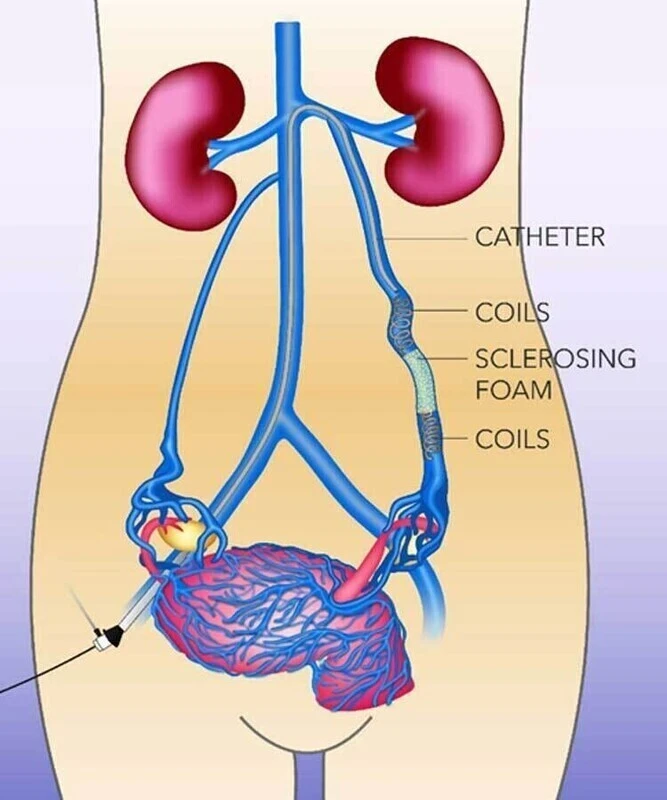
An interventional radiologist inserts a thin tube called a catheter into a vein, usually through a small puncture in the groin or neck. Using X-ray guidance and contrast material, the specialist identifies the abnormal veins.
Small metal coils, plugs, or other suitable embolic agents may then be placed inside the targeted veins to block the abnormal flow. The blood is redirected through other healthy veins.
The specific veins treated and the embolic materials used depend on the patient’s venous anatomy and the findings during the procedure.
The aim is to relieve symptoms caused by pelvic venous disorders. The degree of improvement varies from person to person, and embolization does not guarantee complete or permanent relief of pelvic pain.
Is pelvic vein embolization a minimally invasive procedure?
Yes. Pelvic vein embolization is performed through a small puncture in the skin rather than a large surgical incision.
The procedure is generally performed by an interventional radiologist in a specialised imaging suite. Local anaesthesia is used at the catheter insertion site, and sedation may be provided when appropriate.
X-ray imaging allows the specialist to guide the catheter through the veins and deliver the embolic material to the intended location.
Many patients can return home on the same day after a period of observation, depending on their condition and the treating team’s assessment.
Although it is minimally invasive, embolization is still a medical procedure with potential risks. A specialist consultation is necessary to determine whether it is suitable for you.
Who may be a suitable candidate for pelvic vein embolization?
Pelvic vein embolization may be considered for patients who have persistent pelvic pain and evidence of abnormal pelvic venous blood flow that is thought to contribute to their symptoms.
Treatment may be discussed when:
- Pelvic pain has persisted or recurred over time.
- Symptoms are consistent with a pelvic venous disorder.
- Imaging or other investigations identify relevant abnormal veins.
- Other possible causes of pelvic pain have been assessed.
- Conservative treatment has not provided sufficient relief, or a specialist determines that a vein procedure is appropriate.
Not everyone with enlarged pelvic veins requires treatment. Patients whose symptoms are caused by another condition may need a different approach.
The decision to proceed with embolization should be made after reviewing the patient’s symptoms, imaging findings, medical history, reproductive plans, and treatment preferences.
How is embolization for Pelvic Congestion Syndrome performed?
The procedure is planned according to the patient’s individual venous anatomy and the location of the abnormal blood flow.
It generally involves the following steps:
- 1. Preparation
The patient is positioned on the procedure table. The healthcare team reviews the relevant medical history, medications, allergies, and imaging findings. The access site is cleaned and prepared under sterile conditions. - 2. Catheter insertion
Local anaesthesia is administered at the selected access site, commonly in the groin or neck. A small puncture is made, and a thin catheter is introduced into a vein. - 3. Image-guided navigation
The interventional radiologist guides the catheter through the venous system using X-ray imaging. Contrast material is injected to visualise the veins and identify abnormal blood flow. - 4. Embolization
Once the target veins have been identified, the specialist places suitable embolic materials, such as metal coils or plugs, and may use other embolic agents when indicated. These materials block the abnormal veins and help prevent blood from flowing backward through them. - 5. Completion and observation
The catheter is removed, and pressure is applied to the puncture site to reduce the risk of bleeding. A small dressing is placed over the site.
The patient is monitored after the procedure. Discharge may be possible on the same day if recovery is satisfactory and the treating team considers it appropriate.
The procedure’s duration varies depending on the number of veins involved, the patient’s anatomy, and the complexity of treatment.
What are the benefits of pelvic vein embolization?
For appropriately selected patients, pelvic vein embolization may offer several benefits:
- Minimally invasive treatment: Uses a small skin puncture rather than a large surgical incision.
- Potential pain relief: May reduce chronic pelvic discomfort associated with abnormal venous blood flow.
- Shorter recovery: Many patients can return to light activities relatively soon after the procedure.
- Outpatient treatment: Many patients do not require an overnight hospital stay.
- Targeted treatment: Allows the specialist to treat the veins identified as contributing to the pelvic venous disorder.
- Alternative to surgery: May provide a catheter-based treatment option for suitable patients.
The benefits depend on the underlying cause of the symptoms and the patient’s individual circumstances. Some patients may continue to experience pelvic pain even when the targeted veins have been successfully treated.
Is pelvic vein embolization safe? What are the possible risks?
Pelvic vein embolization is generally well tolerated, but complications can occur.
Potential risks include:
- Bruising, bleeding, or a small collection of blood at the catheter insertion site
- Temporary pelvic or lower-back discomfort
- Mild fever or flu-like symptoms following the procedure
- Inflammation or irritation involving the treated veins
- Infection
- An allergic reaction to contrast material
- Injury to a blood vessel
- Movement of an embolization coil or other embolic material from its intended position, which is uncommon
- Incomplete treatment or recurrence of abnormal venous blood flow
- A reaction to sedation or anaesthesia, if used
- Radiation exposure from the X-ray imaging used during the procedure
In uncommon cases, the procedure may not be technically possible if the target veins cannot be safely accessed.
Your interventional radiologist will explain the potential benefits and risks based on your medical history, imaging findings, and treatment plan.
How long does recovery take after pelvic vein embolization?
Recovery varies depending on the complexity of the procedure and the patient’s overall health.
Many patients return home on the same day and can resume light daily activities relatively soon. Mild pelvic discomfort, lower-back pain, or tenderness around the puncture site may occur during the initial recovery period.
Your treating team may recommend:
- Resting for the remainder of the day after the procedure
- Keeping the catheter insertion site clean and following wound-care instructions
- Avoiding heavy lifting and strenuous exercise for the period advised by your doctor
- Taking prescribed or recommended pain relief as directed
- Gradually returning to normal daily activities
- Attending follow-up appointments as advised
Contact your healthcare provider if you experience severe or worsening pain, persistent fever, significant bleeding, increasing swelling at the puncture site, or any other concerning symptoms. Seek urgent medical attention for chest pain or difficulty breathing.
Follow the specific discharge instructions provided by your treating team.
How soon will I notice improvement after embolization?
Symptom improvement varies from person to person.
Some patients may notice changes in their pelvic discomfort over the following weeks. In others, improvement may take longer, and symptoms can temporarily worsen because of inflammation following the procedure.
It may take one to three months to assess the overall response to treatment, although the timing differs between patients.
If pain continues or returns, your healthcare provider may recommend further assessment to determine whether the treated veins remain closed, additional abnormal veins are present, or another condition is contributing to the symptoms.
Does pelvic vein embolization permanently relieve pelvic pain?
Embolization aims to reduce pelvic pain caused by abnormal venous blood flow. Many appropriately selected patients experience symptom improvement, but results are not the same for everyone.
Chronic pelvic pain can have several causes, and more than one condition may be present at the same time. If pelvic pain is not primarily caused by pelvic venous disorders, embolization may provide limited benefit.
Some patients may experience persistent or recurrent symptoms even after technically successful treatment. Your healthcare provider can discuss realistic expectations based on your assessment and findings.
Can Pelvic Congestion Syndrome return after embolization?
Yes. Symptoms can persist or recur after pelvic vein embolization.
This may happen if additional abnormal veins contribute to the condition, if some abnormal blood flow remains, or if new venous pathways develop over time.
Persistent or recurrent pelvic pain does not automatically mean that the procedure has failed. Further evaluation may be needed to identify the cause.
Depending on the findings, your specialist may recommend additional imaging, further treatment, or assessment for other causes of pelvic pain.
Does pelvic vein embolization affect fertility or future pregnancy?
The effects of pelvic vein embolization on fertility and future pregnancy depend on the patient’s individual circumstances.
The procedure is intended to treat abnormal venous blood flow rather than to treat infertility directly. It should not be presented as a fertility treatment or as a guarantee of improved reproductive outcomes.
If you are planning a pregnancy, are currently pregnant, or have concerns about fertility, discuss these with your gynaecologist and interventional radiologist before treatment.
Your healthcare team can explain the potential benefits, limitations, and timing considerations relevant to your situation.
What follow-up care is needed after pelvic vein embolization?
Follow-up care depends on your symptoms, the veins treated, and the findings during the procedure.
Your healthcare provider may recommend:
- Reviewing recovery and checking the catheter insertion site
- Assessing whether pelvic pain and related symptoms have improved
- Reviewing any side effects or new symptoms
- Additional ultrasound, MRI, or other imaging when clinically indicated
- Further assessment if symptoms persist or recur
The timing of follow-up appointments should be determined by your treating specialist.
Is pelvic vein embolization better than surgery?
Pelvic vein embolization and surgical treatment may both be considered for selected patients with pelvic venous disorders. The most appropriate option depends on the underlying venous problem, symptoms, imaging findings, overall health, and treatment goals.
Pelvic vein embolization
- Uses a catheter introduced through a small puncture in the skin
- Uses image guidance to identify and treat abnormal veins
- Usually does not require a large surgical incision
- Often allows patients to return home on the same day
- May be suitable for patients who prefer a minimally invasive approach
Surgical treatment
- May involve surgically closing affected veins or addressing another underlying problem
- Requires an appropriate surgical approach and anaesthesia
- Has its own recovery requirements and potential complications
- May be considered in selected circumstances based on the patient’s condition
Not every patient needs a procedure, and embolization is not the right treatment for every cause of chronic pelvic pain. Discuss the expected benefits, risks, alternatives, and recovery requirements with your healthcare provider before making a decision.
Frequently asked questions about pelvic vein embolization
Is Pelvic Congestion Syndrome dangerous?
PCS is generally not considered life-threatening, but persistent pelvic pain can significantly affect daily activities and quality of life. Ongoing symptoms should be assessed by a healthcare professional to confirm the cause and determine appropriate treatment.
Is pelvic vein embolization a major surgery?
No. It is a minimally invasive, catheter-based procedure performed through a small puncture in the skin. However, it remains a medical procedure with potential risks and requires appropriate assessment and monitoring.
How long does pelvic vein embolization take?
The duration varies according to the patient’s anatomy and the complexity of the procedure. Your interventional radiologist can provide an estimate after reviewing your case.
Will I need to stay in the hospital overnight?
Many patients return home on the same day after an observation period. Whether an overnight stay is needed depends on your medical condition, recovery, and the treating team’s assessment.
Is pelvic vein embolization painful?
Local anaesthesia is used at the catheter insertion site, and sedation may be offered when appropriate. Some patients experience pelvic or lower-back discomfort following the procedure. Your treating team can advise you on suitable pain relief.
When can I return to work?
Many patients can resume light daily activities relatively soon after treatment. The timing of return to work depends on your recovery and whether your job involves prolonged standing, heavy lifting, or strenuous activity.
Will the embolization coils remain inside my body?
The coils or other permanent embolic materials used during treatment are intended to remain in the targeted veins. They help block abnormal blood flow and are not routinely removed after successful treatment.
Does everyone with enlarged pelvic veins need embolization?
No. Enlarged pelvic veins can occur without symptoms. Treatment is considered when the patient’s symptoms and clinical findings indicate that abnormal venous blood flow is likely to be contributing to the problem.
What if pelvic pain continues after embolization?
Persistent pain may have several explanations, including remaining or recurrent abnormal venous blood flow or another condition causing pelvic pain. Your healthcare provider may recommend further assessment and imaging to determine the next steps.