Angioplasty is a minimally invasive medical procedure used to open narrowed or blocked blood vessels and improve blood circulation.
Angioplasty
What is angioplasty?
Angioplasty is a minimally invasive medical procedure used to open narrowed or blocked blood vessels and improve blood circulation.
Arteries carry oxygen-rich blood from the heart to different parts of the body. When an artery becomes narrowed or blocked, the blood supply to the affected area may be reduced. This can cause symptoms such as pain, numbness, difficulty walking, or, in severe cases, tissue damage.
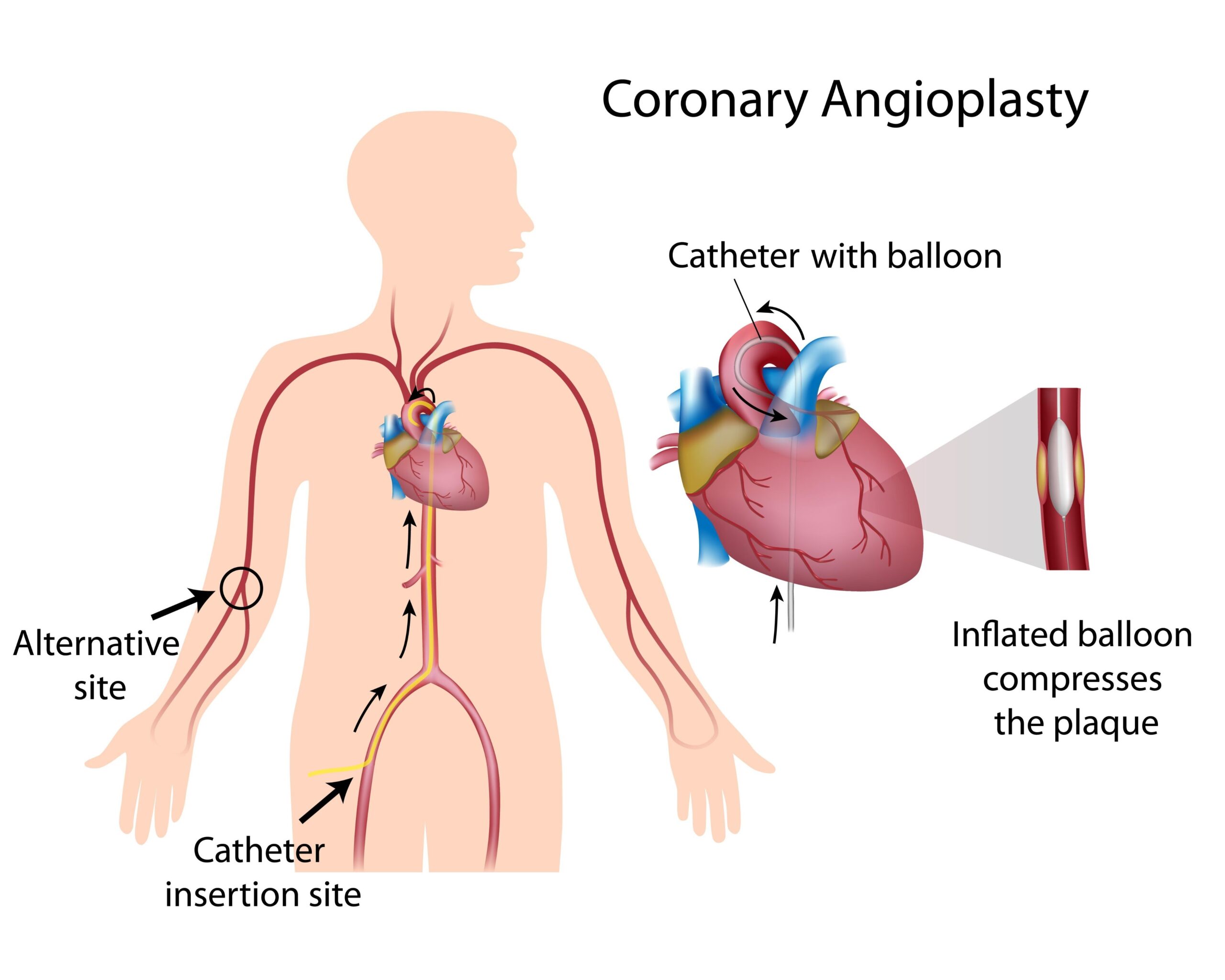
During angioplasty, a thin tube called a catheter is inserted into a blood vessel. A small balloon attached to the catheter is guided to the narrowed area and inflated to widen the blood vessel.
In some cases, a small metal mesh tube called a stent is placed inside the artery to help keep it open.
Angioplasty is commonly used to treat peripheral artery disease and other conditions involving narrowed or blocked blood vessels.
What is peripheral angioplasty?
Peripheral angioplasty is a catheter-based procedure used to improve blood flow through arteries outside the heart, particularly those supplying the legs and arms.
It is commonly recommended for patients with peripheral artery disease (PAD), a condition in which arteries become narrowed or blocked, often due to the buildup of fatty deposits.
Reduced blood circulation can cause pain while walking, discomfort at rest, non-healing wounds, and other complications.
Peripheral angioplasty aims to restore better blood flow by widening the affected artery, helping improve circulation to the surrounding tissues.
Why might I need angioplasty?
Your doctor may recommend angioplasty when an artery becomes significantly narrowed or blocked and blood circulation is affected.
Common reasons include:
- Narrowing or blockage of arteries supplying the legs
- Peripheral artery disease (PAD)
- Pain in the legs while walking that limits daily activities
- Persistent pain in the feet or legs, including pain at rest
- Poor circulation associated with non-healing wounds or ulcers
- Reduced blood flow caused by atherosclerosis
- Narrowing of certain arteries supplying the kidneys or other organs
- Selected vascular blockages requiring restoration of blood flow
- Recurrent narrowing in a previously treated blood vessel
The decision to perform angioplasty depends on the location and severity of the blockage, symptoms, overall health, and response to other treatments.
Not every narrowed artery requires angioplasty. Some patients may benefit from medication, supervised exercise, lifestyle changes, or other treatments.
What causes arteries to become narrowed or blocked?
The most common cause of arterial narrowing is atherosclerosis, a condition in which fatty deposits, cholesterol, calcium, and other substances accumulate inside the artery walls.
Over time, these deposits can form plaques that reduce the space available for blood to flow.
Other causes of reduced blood flow may include:
- Blood clots inside an artery
- Damage or injury to blood vessels
- Certain inflammatory conditions affecting blood vessels
- Restenosis, which is the recurrence of narrowing after a previous vascular procedure
- Other structural abnormalities affecting the arteries
The underlying cause helps determine which treatment is most appropriate.
What are the symptoms of blocked arteries in the legs?
Symptoms depend on the severity and location of the blockage.
Common symptoms of reduced blood circulation in the legs include:
- Pain or cramping in the calf, thigh, or buttock while walking
- Leg discomfort that improves with rest
- Numbness or weakness in the affected leg
- Coldness in the lower leg or foot
- Changes in skin colour
- Slow-growing or non-healing wounds on the feet or legs
- Reduced hair growth on the legs
- Shiny or unusually dry skin
- Pain in the feet or toes while resting, particularly at night
In severe cases, reduced blood supply can lead to tissue damage and gangrene.
Sudden severe pain, a cold or pale limb, new numbness, or weakness may indicate acute loss of blood supply and requires immediate medical attention.
Which conditions can angioplasty help treat?
Angioplasty can be used to improve blood flow in selected arteries affected by narrowing or blockage.
These may include:
- Peripheral artery disease (PAD): Narrowing of arteries supplying the legs or arms.
- Atherosclerosis: Buildup of fatty deposits inside the arteries.
- Iliac artery stenosis: Narrowing of arteries supplying blood to the pelvis and lower limbs.
- Femoral artery disease: Narrowing or blockage of arteries in the thigh.
- Popliteal artery disease: Narrowing or blockage of the artery behind the knee.
- Below-the-knee arterial disease: Blockages affecting arteries supplying the lower leg and foot.
- Renal artery stenosis: Narrowing of arteries supplying the kidneys in selected patients.
- Restenosis: Recurrence of narrowing in a previously treated artery.
The suitability of angioplasty depends on the location, length, and severity of the blockage, as well as the patient’s symptoms and overall condition.
What are the different types of angioplasty?
Angioplasty can be performed in different parts of the body depending on the affected blood vessel.
- 1. Peripheral Angioplasty
Used to open narrowed or blocked arteries supplying the legs or arms. It is commonly performed in patients with peripheral artery disease. - 2. Iliac Angioplasty
Used to treat narrowing or blockage in the iliac arteries, which supply blood to the pelvis and lower limbs. - 3. Femoral and Popliteal Angioplasty
Used to improve blood flow through arteries in the thigh and behind the knee. - 4. Below-the-Knee Angioplasty
Used to treat narrowed or blocked arteries below the knee, particularly in selected patients with poor circulation and non-healing foot wounds. - 5. Renal Angioplasty
Used in selected patients to treat narrowing of the arteries supplying the kidneys. - 6. Coronary Angioplasty
Used to open narrowed or blocked coronary arteries that supply blood to the heart muscle. This procedure is generally performed by an interventional cardiologist and is commonly known as percutaneous coronary intervention (PCI).
The appropriate procedure depends on the blood vessel involved and the patient’s medical condition.
What is a stent, and why might I need one?
A stent is a small, expandable metal mesh tube that is placed inside a blood vessel to help keep it open.
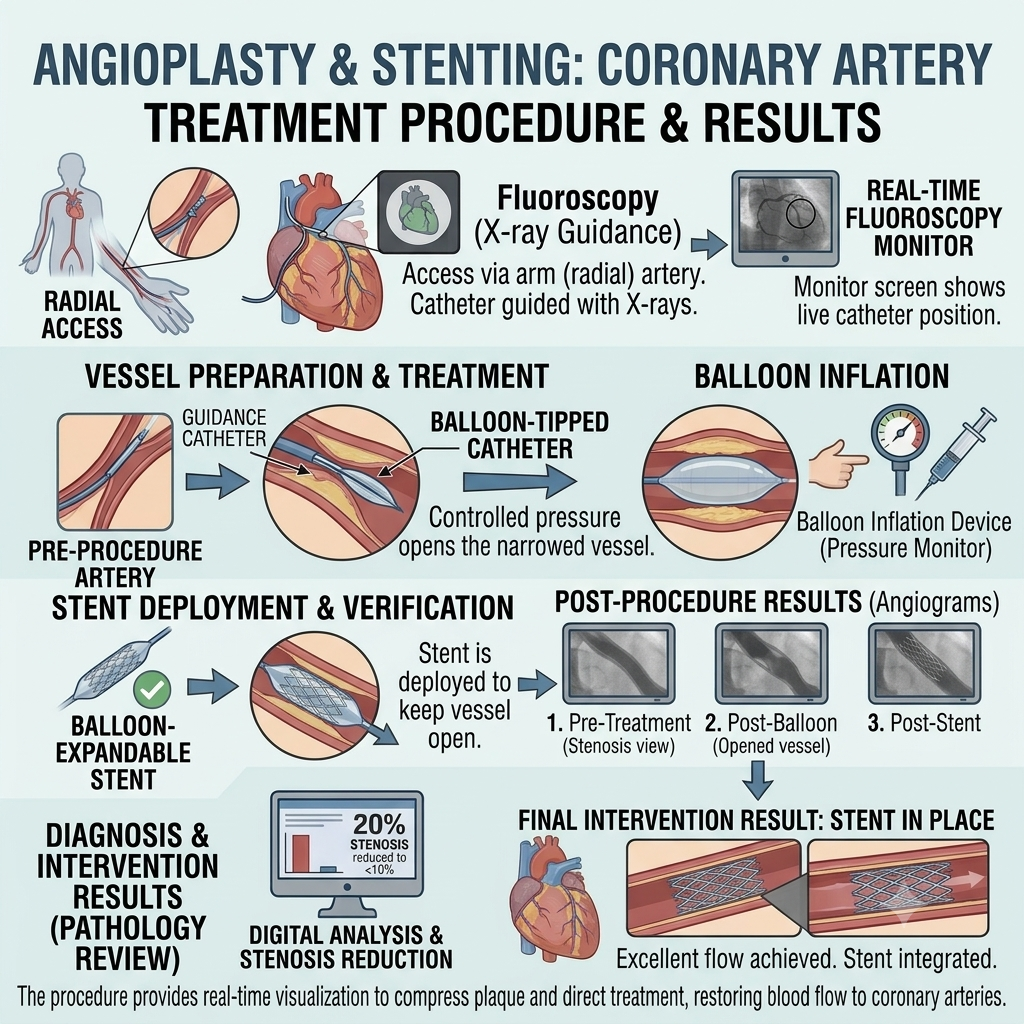
During angioplasty, the balloon widens the narrowed section of the artery. In some cases, the specialist may decide that a stent is needed to support the artery and maintain blood flow.
Stents may be recommended when:
- The artery does not remain sufficiently open after balloon angioplasty.
- There is significant narrowing remaining after balloon treatment.
- The blood vessel needs additional support.
- The characteristics or location of the blockage make stent placement appropriate.
Not every angioplasty requires a stent. Some blockages can be treated using a balloon alone, including selected procedures using drug-coated balloons.
Your specialist will determine whether a stent is appropriate based on the anatomy and treatment findings.
How is angioplasty performed?
Peripheral angioplasty is generally performed in a specialised angiography or interventional radiology suite.
The patient lies on an examination table, and the healthcare team monitors vital signs throughout the procedure.
The procedure generally involves the following steps:
- 1. Preparation
The healthcare team reviews the patient’s medical history, medications, allergies, blood tests, and previous imaging. An intravenous (IV) line may be placed to administer medication or fluids when required. - 2. Preparation of the access site
The selected access area, commonly the groin or wrist, is cleaned with an antiseptic solution and covered with sterile drapes. - 3. Local anaesthesia
Local anaesthetic is injected into the skin and surrounding tissues to numb the access area. Sedation may also be provided when appropriate. - 4. Catheter insertion
A small puncture is made in the selected artery. A thin catheter and guidewire are introduced into the blood vessel. - 5. Image-guided navigation
Using continuous X-ray imaging, the specialist carefully guides the catheter and guidewire toward the narrowed or blocked artery. - 6. Identification of the blockage
Contrast material is injected through the catheter to make the blood vessels visible. This helps the specialist identify the location and extent of the narrowing. - 7. Balloon angioplasty
A balloon-tipped catheter is positioned across the narrowed area. The balloon is briefly inflated to widen the artery and improve blood flow. It is then deflated and removed.
The balloon may need to be inflated more than once, depending on the blockage. - 8. Stent placement, if required
If additional support is needed, a metal mesh stent may be placed across the treated section of the artery. The stent expands inside the vessel and remains in place after the catheter is removed. - 9. Completion
The specialist takes additional images to assess blood flow through the treated artery.
The catheter is removed, and pressure or a suitable closure device is used to prevent bleeding at the access site. - Leg pain while walking limits everyday activities.
- Symptoms persist despite appropriate medical treatment and exercise therapy.
- There is pain in the foot or leg at rest due to poor circulation.
- Non-healing wounds are associated with reduced arterial blood flow.
- Imaging confirms a narrowing or blockage that can be treated with a catheter-based approach.
- Restoring blood flow may help improve circulation to the affected limb.
- Improved blood circulation: Widens narrowed arteries and helps restore blood flow.
- Minimally invasive treatment: Requires only a small puncture rather than a major surgical incision.
- Potential symptom relief: May reduce leg pain and discomfort caused by poor circulation.
- Support for wound healing: Improved blood supply may help selected patients with non-healing foot or leg wounds.
- Shorter recovery: Many patients recover more quickly than after open bypass surgery.
- Targeted treatment: Allows the specialist to treat specific narrowed or blocked sections of an artery.
- Possible stent placement: A stent can provide additional support to help keep the treated artery open.
- Bruising, bleeding, or swelling at the catheter insertion site
- Formation of a blood collection (haematoma) near the puncture site
- Injury or damage to the treated artery
- Formation of a blood clot
- Sudden blockage of the treated artery
- Re-narrowing of the artery after treatment, known as restenosis
- Movement of plaque or clot material into smaller blood vessels
- Allergic reaction to contrast material
- Kidney injury associated with contrast material, particularly in patients with existing kidney problems
- Infection at the access site
- Rarely, loss of blood supply to the affected limb or need for emergency treatment
- Inform your doctor about all medications you take, including blood thinners, aspirin, diabetes medication, vitamins, and supplements.
- Tell the healthcare team about any allergies, particularly previous reactions to contrast material.
- Inform your doctor if you have kidney disease, diabetes, or a bleeding disorder.
- Blood tests may be required to assess kidney function and blood-clotting ability.
- Follow the instructions regarding eating and drinking. Fasting may be required before the procedure.
- Inform your doctor if you are pregnant or think you may be pregnant.
- Wear comfortable clothing and remove jewellery around the procedure area.
- Arrange for someone to accompany you home if sedation is planned.
- Mild soreness or bruising at the access site
- Temporary swelling around the puncture
- Mild discomfort in the treated limb
- A small amount of tenderness near the catheter insertion area
- Resting for the period advised by your healthcare team.
- Keeping the catheter insertion site clean and following dressing instructions.
- Avoiding heavy lifting and strenuous exercise for the recommended period.
- Avoiding excessive bending or pressure on the affected wrist or leg.
- Drinking fluids as advised, particularly if contrast material was used and you have no fluid restriction.
- Taking prescribed medications as directed.
- Attending follow-up appointments to monitor circulation and treatment results.
- The location and length of the original blockage
- The type of artery treated
- The patient’s underlying vascular disease
- Smoking and other cardiovascular risk factors
- Other medical conditions, including diabetes
- Antiplatelet medicines: Such as aspirin or clopidogrel, to reduce the risk of blood clots.
- Cholesterol-lowering medicines: Such as statins, to help manage cholesterol and reduce cardiovascular risk.
- Blood pressure medication: To help control high blood pressure.
- Diabetes medication: To support blood sugar management when required.
- Uses a catheter and balloon to widen the narrowed artery.
- May include placement of a stent.
- Requires only a small puncture in the skin.
- Usually involves a shorter initial recovery period.
- May need to be repeated if the artery becomes narrowed again.
- Uses a healthy blood vessel from the patient’s body or a suitable graft to create an alternative route for blood flow.
- Requires a surgical operation and incisions.
- May be considered for extensive or complex arterial blockages.
- Can provide longer-lasting results in selected patients.
- Generally involves a longer recovery period than catheter-based angioplasty.
A small dressing is placed over the puncture, and the patient is moved to a recovery area for observation.
Is angioplasty a minimally invasive procedure?
Yes. Angioplasty is considered minimally invasive because it is performed through a small puncture in the skin rather than a large surgical incision.
The procedure generally uses local anaesthesia, and patients are often awake during treatment. Sedation may be provided when appropriate.
A catheter is guided through the blood vessels using X-ray imaging, allowing the specialist to reach the affected artery without open surgery.
Many patients can return home on the same day or after a short hospital stay. The exact recovery period depends on the patient’s condition, the complexity of treatment, and whether additional procedures were performed.
Who may be a suitable candidate for peripheral angioplasty?
Peripheral angioplasty may be considered for patients with narrowed or blocked arteries that significantly affect blood circulation.
It may be recommended when:
Not every patient with peripheral artery disease needs angioplasty.
The specialist will consider the patient’s symptoms, vascular imaging, general health, and alternative treatments before recommending the procedure.
What are the benefits of angioplasty?
For appropriately selected patients, angioplasty may provide several benefits:
The results depend on the patient’s condition, the location and extent of the blockage, and other factors affecting circulation.
Angioplasty does not cure the underlying tendency to develop atherosclerosis. Continued medical care and lifestyle changes remain important.
Is angioplasty safe? What are the possible risks?
Angioplasty is generally considered safe when performed by an appropriately trained specialist. However, complications can occur.
Possible risks include:
The risks vary depending on the location of the blockage, the patient’s overall health, and the complexity of the procedure.
Your specialist will review your medical history and explain the potential benefits and risks before treatment.
How long does an angioplasty procedure take?
The duration depends on the location and complexity of the blockage and whether one or multiple arteries need treatment.
A straightforward peripheral angioplasty may take around one hour, although more complex procedures can take longer.
Additional time may be required for preparation, imaging, stent placement, and post-procedure observation.
Your specialist can provide a more specific estimate after reviewing your imaging and treatment plan.
How should I prepare for angioplasty?
Preparation depends on the type of angioplasty, the patient’s medical condition, and whether sedation or additional treatment is planned.
Before the procedure:
Important: Do not stop taking prescribed blood thinners, aspirin, or diabetes medication without specific instructions from your treating doctor.
What happens after angioplasty?
After the procedure, the catheter is removed, and the access site is treated to prevent bleeding.
You will be transferred to a recovery area, where healthcare professionals monitor your blood pressure, pulse, and overall condition.
You may be asked to lie still for a period of time, particularly if the catheter was inserted through an artery in the groin.
The treated limb may also be checked to assess circulation, temperature, colour, and pulses.
After the procedure, you may experience:
These symptoms generally improve over the following days.
Your healthcare team will provide instructions before discharge.
How long does it take to recover from angioplasty?
Recovery varies depending on the complexity of the procedure, the access site, and the patient’s overall health.
Many patients can return home on the same day or after an overnight stay.
Recovery recommendations may include:
The timing for returning to work, exercise, and normal activities depends on your recovery and your doctor’s advice.
Seek urgent medical attention if you experience persistent bleeding, rapidly increasing swelling, severe pain, sudden numbness, weakness, or a cold or discoloured limb.
When will I notice improvement after angioplasty?
The timing of improvement depends on the condition being treated and the severity of the circulation problem.
Some patients notice improved circulation and reduced leg discomfort relatively soon after the procedure.
Patients with non-healing wounds may require a longer period to see improvement because wound healing takes time and depends on several factors, including the extent of tissue damage, diabetes control, and infection.
Your doctor may recommend follow-up examinations, Doppler ultrasound, or other imaging tests to assess blood flow through the treated artery.
Angioplasty improves blood flow but does not guarantee complete symptom relief or wound healing in every patient.
Can an artery become blocked again after angioplasty?
Yes. An artery can become narrowed again after angioplasty. This is known as restenosis.
Restenosis may occur because of tissue growth within the treated area, progression of atherosclerosis, or other changes in the blood vessel.
The risk depends on factors such as:
If symptoms return, your doctor may recommend further assessment using Doppler ultrasound or other imaging.
Depending on the findings, repeat angioplasty, stent placement, or surgical bypass may be considered.
Do I need medication after angioplasty?
Some patients are prescribed medication after angioplasty to reduce the risk of blood clots and help protect the treated artery.
Depending on the procedure and the patient’s condition, medication may include:
The type and duration of medication depend on the treatment performed, whether a stent was placed, and the patient’s medical history.
Do not stop or change prescribed medication without consulting your treating doctor.
Is angioplasty better than bypass surgery?
Angioplasty and bypass surgery are two different methods of improving blood flow through narrowed or blocked arteries.
The most appropriate treatment depends on the location and extent of the blockage, the patient’s overall health, and the expected long-term benefits.
Angioplasty
Surgical bypass
Neither option is universally better. Your vascular specialist will explain the most suitable approach based on your condition and treatment goals.
Frequently asked questions about angioplasty
Is angioplasty a major surgery?
No. Angioplasty is a minimally invasive procedure performed through a small puncture in the skin. It generally does not require a large surgical incision.
Will I be awake during angioplasty?
Most patients remain awake during the procedure. Local anaesthesia is used at the catheter insertion site, and sedation may be provided when appropriate.
Is angioplasty painful?
The local anaesthetic injection may cause a brief stinging sensation. You may feel pressure when the catheter is inserted. Some discomfort can occur when the balloon is inflated, but it usually settles when the balloon is deflated.
Will I need a stent during angioplasty?
Not always. Some narrowed arteries can be treated with balloon angioplasty alone. A stent may be placed when additional support is needed to keep the artery open.
Will I need to stay in the hospital overnight?
Many patients return home on the same day or after a short observation period. An overnight stay may be recommended depending on the complexity of the procedure and the patient’s condition.
Can I walk after angioplasty?
Most patients can gradually resume walking after the required observation period. Your healthcare team will advise when it is safe to move around, particularly if the catheter was inserted through the groin.
Does angioplasty permanently cure blocked arteries?
Angioplasty improves blood flow through the treated artery but does not cure the underlying process of atherosclerosis. Medication, exercise, smoking cessation, and management of other risk factors remain important.
Can angioplasty prevent amputation?
In selected patients with severely reduced blood circulation, angioplasty may help restore blood flow and support wound healing. However, it cannot guarantee that amputation will be prevented. The outcome depends on the severity of the disease and the condition of the affected tissues.
Can I undergo angioplasty more than once?
Yes. Repeat angioplasty may be considered if an artery becomes narrowed or blocked again. The appropriate treatment depends on the location and cause of the recurrence.
What should I do if my leg becomes cold or painful after angioplasty?
A suddenly cold, pale, painful, numb, or weak limb may indicate reduced blood flow and requires immediate medical assessment. Do not wait for the symptoms to improve on their own.