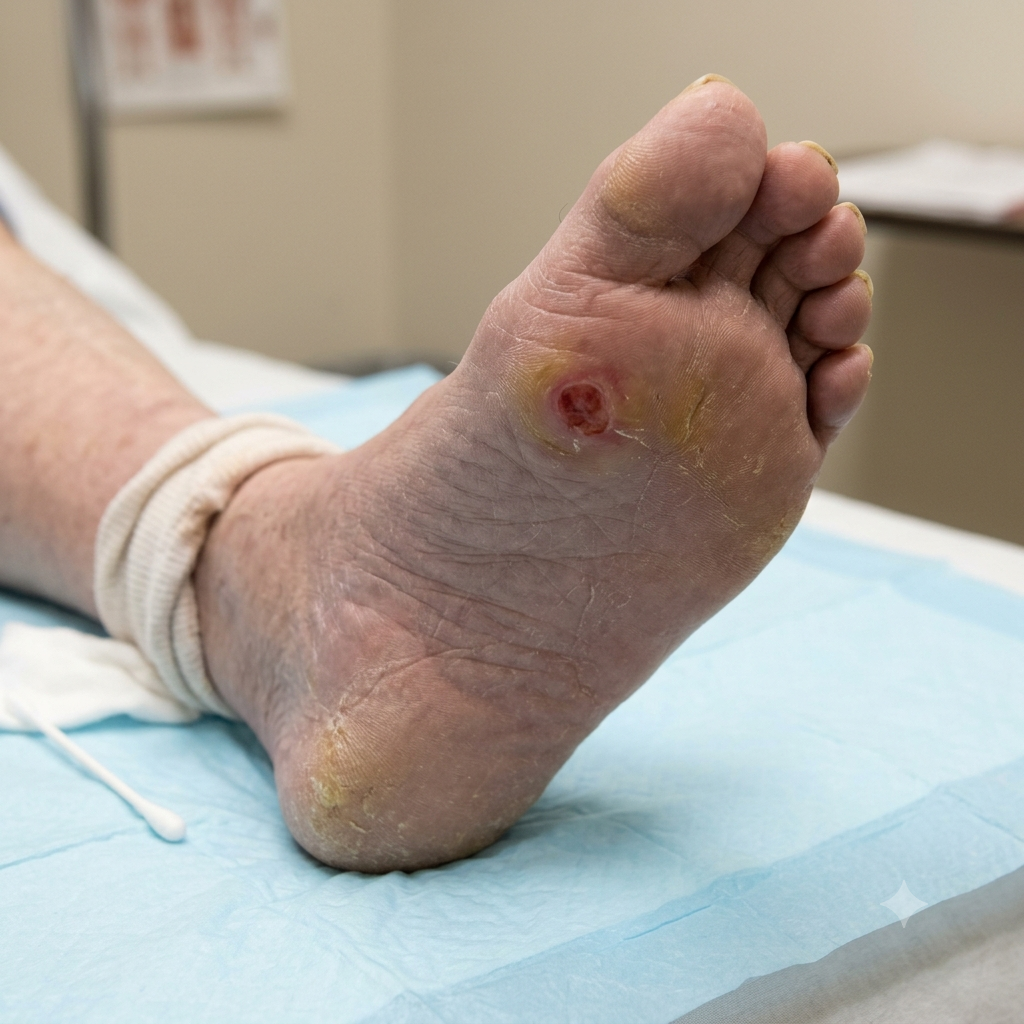
Diabetic foot refers to a range of foot problems that can develop in people living with diabetes. Persistently high blood sugar levels can damage nerves and blood vessels, reducing sensation and blood circulation in the feet. This can make even a small cut, blister, or wound difficult to notice and slow to heal.
Diabetic Foot
What Is Diabetic Foot?
Diabetic foot refers to a range of foot problems that can develop in people living with diabetes. Persistently high blood sugar levels can damage nerves and blood vessels, reducing sensation and blood circulation in the feet. This can make even a small cut, blister, or wound difficult to notice and slow to heal.
Over time, an untreated foot wound can become infected, develop into an ulcer, or cause damage to deeper tissues. In severe cases, poor circulation and infection may lead to tissue death (gangrene) and, occasionally, amputation.
Early detection, proper foot care, blood sugar management, and timely medical treatment can significantly reduce the risk of serious complications.
Why Does Diabetic Foot Develop?
Diabetic foot problems commonly develop due to a combination of nerve damage, poor blood circulation, and increased susceptibility to infection.
1. Diabetic Neuropathy (Nerve Damage)
Long-term high blood sugar can damage the nerves, particularly those supplying the feet. This condition is known as diabetic peripheral neuropathy.
It may cause:
- Reduced sensation or numbness in the feet.
- Tingling, burning, or a pins-and-needles sensation.
- Loss of ability to feel pain, heat, or pressure.
- Muscle weakness and changes in foot shape.
- Increased risk of unnoticed cuts, blisters, and injuries.
When sensation is reduced, a person may continue walking on an injured area without realising it, making the wound worse.
2. Poor Blood Circulation
Diabetes increases the risk of peripheral artery disease (PAD), a condition in which arteries supplying blood to the legs and feet become narrowed or blocked.
Reduced blood flow means less oxygen and fewer nutrients reach the affected tissues. As a result:
- Wounds may heal slowly or fail to heal.
- The skin may become dry, thin, or discoloured.
- The feet may feel unusually cold.
- Pain may occur in the legs or feet, particularly while walking or at rest.
- Severe circulation problems may cause tissue damage or gangrene.
3. Infection
High blood sugar and damaged skin can make infections more difficult to control. A minor wound may become infected and spread into deeper tissues or bone if not treated promptly.
Infections may lead to:
- Redness and swelling.
- Warmth around the affected area.
- Pus or unusual discharge.
- Foul-smelling wounds.
- Fever or other signs of systemic infection.
What Are the Symptoms of Diabetic Foot?
Symptoms vary depending on the severity of nerve damage, circulation problems, and infection.
Common warning signs include:
- Numbness or loss of sensation in the feet.
- Burning, tingling, or unusual sensations.
- Dry, cracked skin.
- Blisters, cuts, or sores that do not heal.
- Swelling or redness in the foot.
- Changes in skin colour, including pale, bluish, or darkened areas.
- Thickened toenails or fungal infections.
- Corns and calluses, particularly over pressure points.
- Foot pain while walking or at rest.
- Discharge, pus, or an unpleasant smell from a wound.
- Blackened tissue or gangrene.
Important: A diabetic foot ulcer may not be painful because of nerve damage. The absence of pain does not mean the wound is harmless.
What Is a Diabetic Foot Ulcer?
A diabetic foot ulcer is an open wound or sore that develops on the foot, commonly on the sole, heel, toes, or pressure-bearing areas.
It often develops when repeated pressure, friction, or an unnoticed injury damages the skin. Reduced sensation allows the injury to go unnoticed, while poor circulation can delay healing.
Diabetic foot ulcers can be classified according to their depth and severity:
- Superficial ulcer: Involves the skin’s outer layers.
- Deeper ulcer: Extends into tissues beneath the skin, such as fat, tendons, or muscles.
- Infected ulcer: Contains infection that may spread to surrounding tissues.
- Severe ulcer: May involve bone, tissue death, or gangrene.
Early treatment is essential to prevent the wound from becoming deeper or more complicated.
How Is Diabetic Foot Diagnosed?
A healthcare professional evaluates the foot to identify nerve damage, circulation problems, infection, and the severity of any wound.
Depending on the findings, the following tests may be recommended.
1. Physical Foot Examination
The doctor examines both feet for:
- Cuts, ulcers, blisters, and calluses.
- Skin colour and temperature changes.
- Swelling, deformities, and pressure points.
- Signs of infection or tissue damage.
- Foot pulses and other signs of reduced circulation.
2. Neuropathy Assessment
Tests may include:
- Monofilament test: Checks whether the patient can feel light pressure on different areas of the foot.
- Vibration testing: Evaluates the ability to sense vibration.
- Reflex testing: Checks certain nerve reflexes.
- Temperature or pinprick testing: May help assess sensory changes.
3. Ankle-Brachial Index (ABI)
The ankle-brachial index compares blood pressure measured at the ankle with blood pressure measured in the arm. It helps identify possible peripheral artery disease.
However, in some people with diabetes, calcified and less compressible arteries can make ABI results misleading. Additional vascular tests may therefore be required.
4. Doppler Ultrasound
Doppler ultrasound evaluates blood flow through the arteries supplying the legs and feet.
It can help identify narrowed or blocked arteries and assess circulation in the affected limb.
5. Toe Pressure and Toe-Brachial Index
Toe pressure measurements and the toe-brachial index can help assess blood circulation, particularly when ankle arteries are difficult to compress.
These tests may help estimate the potential for wound healing.
6. CT Angiography (CTA) or MR Angiography (MRA)
These imaging tests provide detailed views of blood vessels and may help identify the location and extent of arterial narrowing or blockage.
They can assist doctors in planning vascular treatment.
7. Catheter Angiography
Catheter angiography is an imaging procedure in which a thin catheter is guided into the blood vessels and contrast dye is injected to visualise blood flow.
It can provide detailed information about narrowed or blocked arteries. In selected cases, treatment such as angioplasty may be performed during the same session.
8. Infection and Bone Assessment
If an infection is suspected, investigations may include:
- Blood tests to assess inflammation and infection.
- A wound sample when appropriate to identify bacteria.
- X-rays to look for bone damage or foreign material.
- MRI when deeper infection or osteomyelitis (bone infection) is suspected.
What Are the Treatment Options for Diabetic Foot?
Treatment depends on the condition of the foot, the severity of the wound, the presence of infection, and the adequacy of blood circulation.
A coordinated treatment plan may involve diabetes specialists, vascular specialists, wound-care professionals, surgeons, and podiatrists where available.
1. Blood Sugar Management
Good blood sugar control is an important part of diabetic foot treatment.
The doctor may review:
- Diabetes medications or insulin.
- Blood glucose monitoring.
- HbA1c levels.
- Diet and physical activity.
- Other conditions such as high blood pressure and high cholesterol.
Managing these factors supports overall health and helps reduce the risk of further complications.
2. Wound Care and Dressing
Appropriate wound care helps protect the affected area and supports healing.
It may include:
- Cleaning the wound using appropriate techniques.
- Removing dead or damaged tissue when clinically indicated (debridement).
- Applying suitable wound dressings.
- Managing excess moisture and wound discharge.
- Monitoring the wound for infection and healing progress.
Wound care should be guided by a trained healthcare professional. Patients should not attempt to cut away calluses or dead tissue themselves.
3. Antibiotic Treatment
Antibiotics may be prescribed when a diabetic foot wound is clinically infected.
The choice and duration depend on the severity of the infection, the likely organisms, test results, and the patient’s clinical condition.
Antibiotics are not routinely required for ulcers that show no signs of infection.
Severe infections may require hospital admission, intravenous antibiotics, and urgent surgical assessment.
4. Offloading and Pressure Relief
Reducing pressure on the affected area is essential for healing many diabetic foot ulcers.
Offloading methods may include:
- Special therapeutic footwear.
- Custom insoles.
- Removable walking boots.
- Total contact casts in suitable patients.
- Other pressure-relieving devices.
The appropriate method depends on the wound location, infection status, circulation, and the patient’s ability to use the device safely.
5. Revascularisation to Improve Blood Flow
When poor circulation prevents a diabetic foot wound from healing, restoring blood flow may be necessary.
This is known as revascularisation. It aims to improve blood supply to the affected leg or foot.
Treatment may involve minimally invasive endovascular procedures or open vascular surgery, depending on the patient’s condition and arterial anatomy.
Angioplasty for Diabetic Foot
Angioplasty is a minimally invasive procedure used to widen narrowed or blocked arteries.
During the procedure:
- The patient receives local anaesthesia, with additional sedation when appropriate.
- A small puncture is made, commonly in an artery in the groin or sometimes the foot.
- A thin catheter and guidewire are advanced through the blood vessels.
- Contrast dye and imaging help identify the narrowed or blocked artery.
- A small balloon is positioned across the affected area and inflated to widen the artery.
- In selected cases, a stent may be placed to help keep the artery open.
- Blood flow is reassessed before the procedure is completed.
The aim is to improve circulation to the foot, support wound healing, and reduce the risk of further tissue damage.
Not every patient needs a stent. The treatment approach depends on the location and nature of the blockage.
Other Endovascular Treatments
Depending on the arterial blockage and the patient’s condition, a vascular specialist may consider:
- Balloon angioplasty.
- Drug-coated balloon angioplasty in selected cases.
- Stent placement when appropriate.
- Treatment of multiple arterial blockages.
Surgical Revascularisation (Bypass Surgery)
In some patients, bypass surgery may be recommended when endovascular treatment is unsuitable or unlikely to provide adequate blood flow.
The procedure creates an alternative route for blood to reach the affected part of the leg or foot, using a suitable vein or graft.
The decision between angioplasty and bypass surgery depends on the patient’s overall health, available blood vessels, severity of disease, and expected benefits and risks.
6. Surgical Treatment and Debridement
Some diabetic foot wounds require surgical treatment.
Depending on the condition, this may involve:
- Removal of dead or infected tissue.
- Drainage of an abscess.
- Removal of infected bone in selected cases.
- Correction of structural foot problems that cause repeated pressure.
- Amputation when severe infection or irreversible tissue damage makes limb preservation impossible.
The goal is to control infection, preserve as much healthy tissue as possible, and protect the patient’s overall health.
Who May Need Diabetic Foot Angioplasty?
Angioplasty may be considered for people with diabetes who have peripheral artery disease and inadequate blood supply to the lower limb.
It may be recommended when:
- A foot ulcer is not healing because of poor circulation.
- There is significant narrowing or blockage in the leg arteries.
- The patient has pain at rest due to severe circulation problems.
- There is tissue damage or gangrene associated with inadequate blood flow.
- Vascular imaging indicates that restoring blood flow may improve the chances of wound healing or limb preservation.
Not every diabetic foot ulcer requires angioplasty. If circulation is adequate, wound care, pressure relief, infection management, and blood sugar control may be the main treatments.
A vascular specialist evaluates the patient’s condition and determines whether revascularisation is appropriate.

What Are the Benefits of Diabetic Foot Angioplasty?
When suitable for the patient, angioplasty may offer several benefits:
- Improves blood flow to the affected leg and foot.
- May help a diabetic foot ulcer heal.
- May reduce pain caused by poor circulation.
- Can help preserve healthy tissue.
- May reduce the risk of major amputation in appropriately selected patients.
- Is minimally invasive compared with open bypass surgery.
- Usually requires a smaller access site and may allow a shorter recovery than open surgery.
The results vary depending on the severity of arterial disease, wound condition, infection, and the patient’s overall health.
Angioplasty cannot reverse nerve damage or directly treat an infection. Wound care, infection management, pressure relief, and diabetes control remain essential.
What Are the Risks and Complications?
Although angioplasty is generally considered a minimally invasive procedure, it has potential risks.
These may include:
- Bleeding or bruising at the catheter insertion site.
- Blood vessel injury.
- Allergic reaction to contrast dye.
- Kidney-related complications from contrast dye, particularly in patients with existing kidney problems.
- Blood clot formation.
- Re-narrowing or re-blockage of the treated artery.
- Infection.
- Rarely, damage to the limb due to reduced blood flow or other complications.
The risks vary from patient to patient. The treating specialist will explain the expected benefits and possible complications before the procedure.
How Should You Prepare for Diabetic Foot Angioplasty?
Preparation depends on the patient’s health, medications, kidney function, and the planned procedure.
The medical team may recommend:
- Reviewing medical history and existing health conditions.
- Checking blood glucose and HbA1c.
- Blood tests, including kidney function and blood clotting tests when indicated.
- Reviewing medications, including diabetes medicines, insulin, blood thinners, and antiplatelet medicines.
- Allergy assessment, especially for previous reactions to contrast dye.
- Reviewing previous Doppler ultrasound or angiography reports.
- Fasting for the period advised by the hospital if sedation or anaesthesia is planned.
Do not stop insulin, blood thinners, or other prescribed medicines without instructions from your treating doctor.
Recovery After Diabetic Foot Angioplasty
Recovery varies according to the procedure, the patient’s general health, and the severity of the underlying circulation problem.
After angioplasty:
- The catheter insertion site is monitored for bleeding or swelling.
- The patient may need to remain in bed for a period, depending on the access site and closure method.
- Blood flow and circulation in the treated limb are assessed.
- The medical team monitors blood pressure, blood glucose, and other relevant parameters.
- Prescribed medicines are continued or adjusted as advised.
Some patients can return home relatively soon, while others may need a longer hospital stay due to infection, complex wounds, or other medical conditions.
The foot wound will continue to require appropriate dressing, pressure relief, and regular assessment even after blood flow improves.
Can Diabetic Foot Be Prevented?
Many diabetic foot complications can be reduced through regular foot care and good diabetes management.
Recommended preventive measures include:
Daily Foot Inspection
- Check both feet every day, including the soles and spaces between the toes.
- Look for cuts, blisters, swelling, redness, cracks, or colour changes.
- Use a mirror or ask someone for help if you cannot see the bottom of your feet.
Proper Foot Hygiene
- Wash feet daily with lukewarm water.
- Dry carefully, especially between the toes.
- Apply moisturiser to dry skin, but avoid applying it between the toes.
- Avoid soaking feet for long periods.
Safe Footwear
- Wear comfortable, properly fitting footwear.
- Avoid walking barefoot, even indoors.
- Check shoes for stones, sharp objects, or rough areas before wearing them.
- Use suitable socks and footwear to reduce friction and pressure.
Nail and Skin Care
- Trim toenails carefully and avoid cutting them too short.
- Do not cut corns or calluses yourself.
- Seek professional help for ingrown nails, thickened nails, or skin problems.
Regular Medical Check-ups
- Have your feet examined regularly by a healthcare professional.
- Attend diabetes reviews and monitor blood glucose.
- Seek early treatment for even minor foot injuries.
When Should You Seek Medical Attention?
People with diabetes should not ignore new foot problems.
Seek prompt medical assessment if you notice:
- A cut, blister, or wound that is not healing.
- New redness, swelling, or warmth.
- Pus or discharge from a wound.
- Unusual skin colour changes.
- New or worsening foot pain.
- A foot that becomes unusually cold.
- Loss of sensation or a new area of numbness.
Seek urgent medical attention if you notice blackened tissue, rapidly spreading redness or swelling, severe pain, fever, confusion, or signs of a serious infection. Do not wait for the wound to become painful, as nerve damage may reduce pain sensation.
Frequently Asked Questions (FAQs)
What is diabetic foot disease?
Diabetic foot disease refers to foot complications associated with diabetes, including nerve damage, poor blood circulation, ulcers, infections, and tissue damage.
Why do diabetic patients develop foot ulcers?
Foot ulcers commonly develop due to reduced sensation from nerve damage, repeated pressure or friction, unnoticed injuries, and poor blood circulation. These factors can prevent wounds from healing normally.
Can diabetic foot ulcers heal?
Yes. Many diabetic foot ulcers can heal with appropriate wound care, pressure relief, infection treatment when needed, and good blood sugar management. If poor circulation is contributing to the wound, restoring blood flow may also be necessary.
Does every diabetic foot ulcer require angioplasty?
No. Angioplasty is considered when significant arterial narrowing or blockage is affecting blood supply to the foot. Many ulcers can be treated with wound care and pressure relief without a vascular procedure.
How does angioplasty help diabetic foot ulcers?
Angioplasty widens narrowed or blocked arteries, improving blood flow to the affected foot. Better circulation may support wound healing and reduce the risk of further tissue damage.
Is diabetic foot angioplasty a major surgery?
Angioplasty is generally a minimally invasive endovascular procedure. It is usually performed through a small puncture in an artery rather than a large surgical incision. However, it is still a specialised vascular procedure with potential risks.
Is a stent always required during angioplasty?
No. A balloon may be sufficient in some cases. A stent is placed only when the treating specialist considers it necessary based on the artery’s condition and the result of balloon treatment.
Can angioplasty prevent amputation?
In selected patients, improving blood flow may help wounds heal and reduce the risk of major amputation. However, it cannot guarantee limb preservation, particularly when there is extensive infection or irreversible tissue damage.
How long does it take for a diabetic foot ulcer to heal?
Healing time varies according to wound size and depth, circulation, infection, blood sugar control, and pressure on the affected area. Some wounds heal within weeks, while more complex ulcers may take several months or longer.
Can diabetic foot problems return after treatment?
Yes. Patients with diabetes remain at risk of developing new ulcers or circulation problems. Regular foot inspections, suitable footwear, blood sugar management, and medical follow-up are important for prevention.
What happens if a diabetic foot ulcer becomes infected?
An infected ulcer may require antibiotics, wound cleaning, and sometimes surgical drainage or removal of infected tissue. Severe infections need urgent medical attention and may require hospital treatment.
Which specialist treats diabetic foot problems?
Treatment may involve a multidisciplinary team, including a diabetologist or endocrinologist, vascular specialist, wound-care professional, podiatrist, and surgeon. A vascular specialist evaluates circulation problems and determines whether angioplasty or another revascularisation procedure is needed.