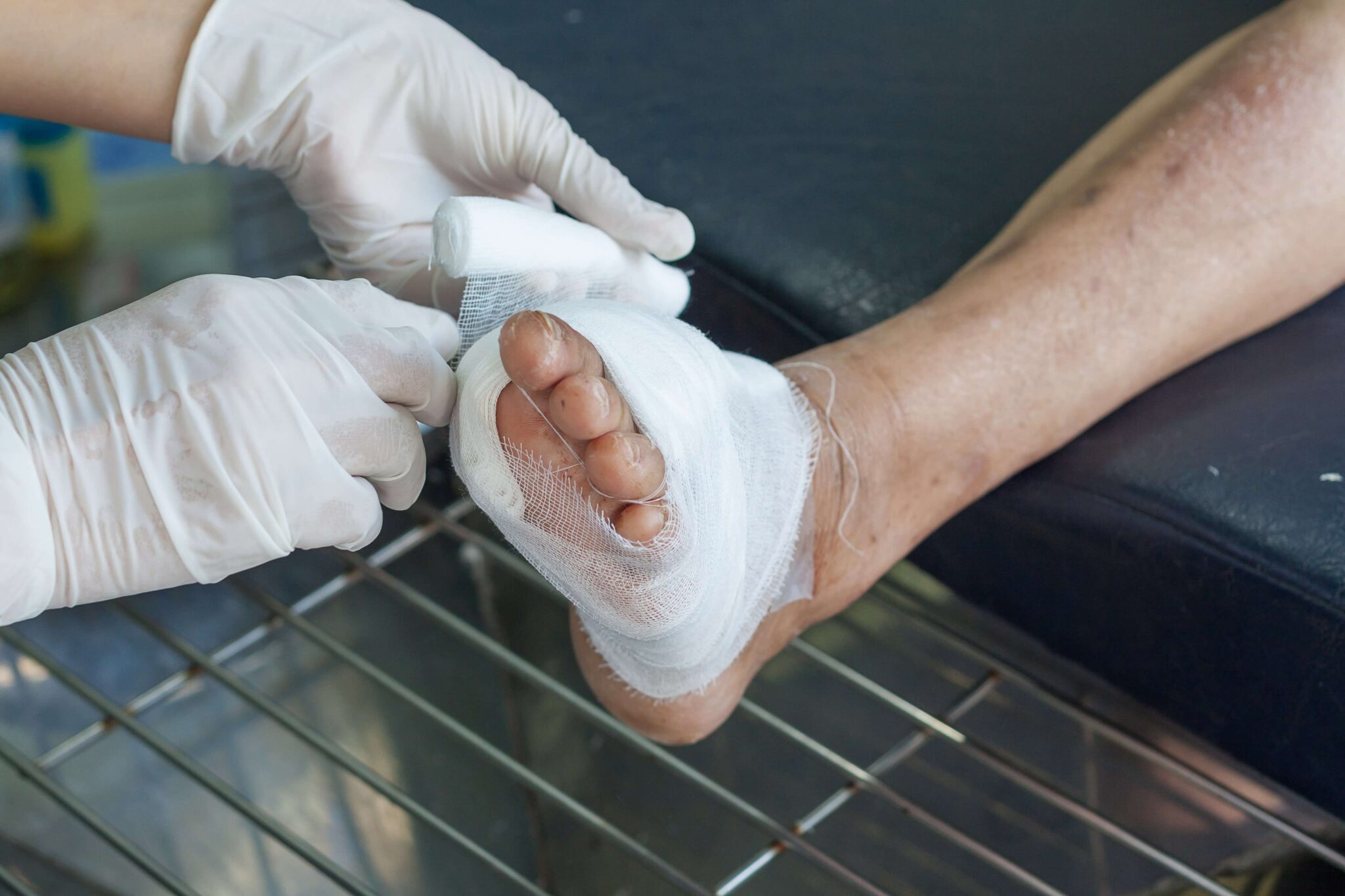
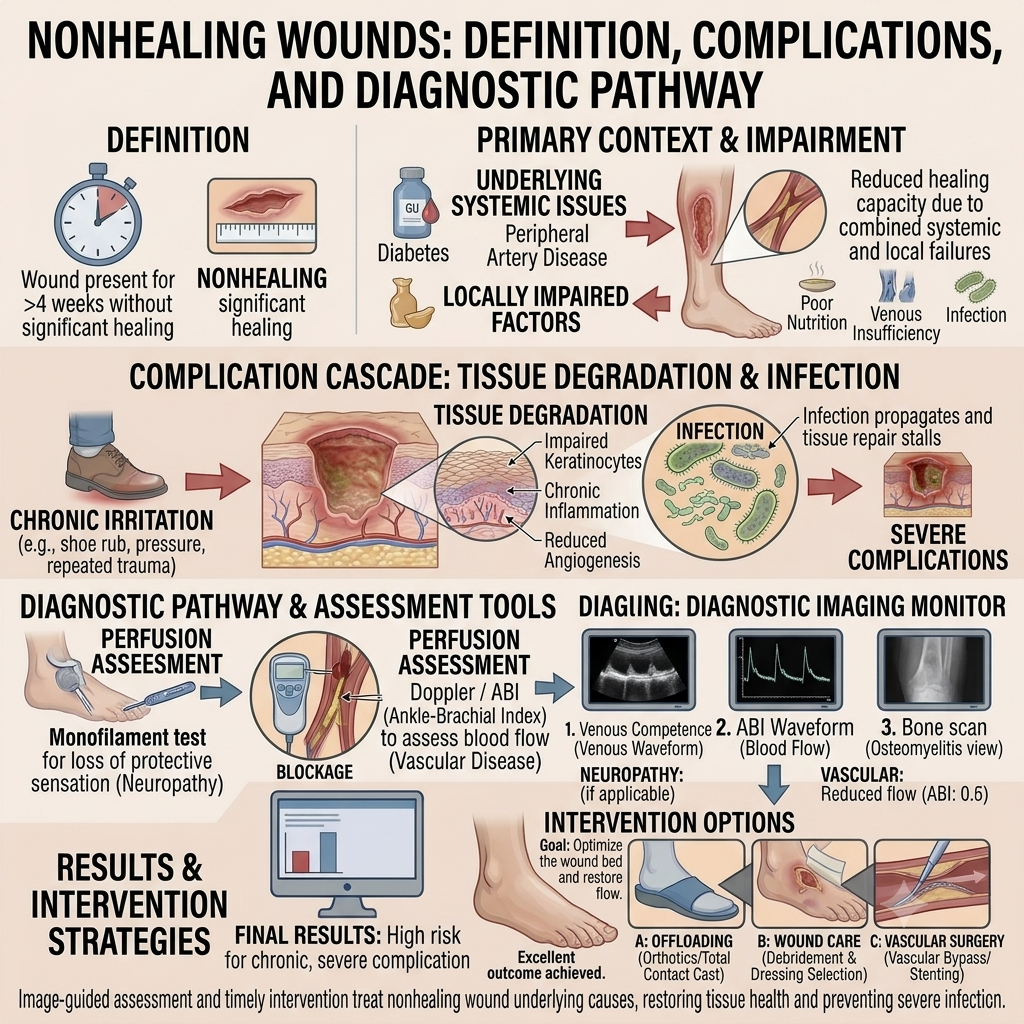
A non-healing wound is an injury or open sore that does not heal within the expected time despite appropriate care. Unlike ordinary wounds, which gradually improve as the body repairs damaged tissue, non-healing wounds may remain open, become larger, or repeatedly return.
Non-Healing Wound
What Is a Non-Healing Wound?
A non-healing wound is an injury or open sore that does not heal within the expected time despite appropriate care. Unlike ordinary wounds, which gradually improve as the body repairs damaged tissue, non-healing wounds may remain open, become larger, or repeatedly return.
These wounds commonly affect the legs and feet, although they can develop on other parts of the body. They may occur due to poor blood circulation, diabetes, infection, prolonged pressure, or other underlying medical conditions.
When blood supply to the affected area is reduced, the tissues may not receive enough oxygen and nutrients to repair themselves. This can delay healing and increase the risk of infection and tissue damage.
Early diagnosis is important to identify the underlying cause and determine the most appropriate treatment.
What Causes Non-Healing Wounds?
Several factors can interfere with the body’s natural wound-healing process.
1. Poor Blood Circulation (Peripheral Artery Disease)
Peripheral artery disease (PAD) occurs when arteries supplying blood to the legs become narrowed or blocked, commonly due to atherosclerosis (plaque build-up).
Reduced blood flow limits the supply of oxygen and nutrients needed for tissue repair.
It may cause:
- Wounds that heal very slowly or do not heal.
- Pain in the legs or feet, particularly while walking.
- Pain in the foot at rest in advanced disease.
- Coldness in the affected foot.
- Pale, bluish, or darkened skin.
- Tissue damage or gangrene in severe cases.
Restoring blood flow may be necessary when inadequate circulation is preventing a wound from healing.
2. Diabetes
Diabetes can affect wound healing through nerve damage, poor circulation, and an increased risk of infection.
People with diabetes may develop:
- Reduced sensation in the feet.
- Unnoticed cuts, blisters, or injuries.
- Foot ulcers that heal slowly.
- Repeated pressure-related wounds.
- Increased risk of wound infection.
Good blood sugar management and regular foot examinations are important for preventing complications.
3. Venous Insufficiency
Chronic venous insufficiency occurs when the veins in the legs cannot return blood efficiently towards the heart.
Increased pressure in the leg veins can cause fluid accumulation, swelling, and skin changes. Over time, this may lead to venous leg ulcers, commonly around the lower leg and ankle.
Common signs include:
- Swelling around the ankles.
- Skin discolouration, particularly around the lower legs.
- Itching or dry, irritated skin.
- Wounds around the ankle that heal slowly.
- A feeling of heaviness in the legs.
Treatment may include compression therapy when appropriate, wound care, and treatment of underlying venous disease.
4. Infection
An infected wound may become increasingly inflamed and fail to heal normally.
Signs of infection may include:
- Increasing redness or warmth.
- Swelling around the wound.
- Pus or unusual discharge.
- Unpleasant smell.
- Increasing pain or tenderness.
- Fever or feeling generally unwell.
Infections that spread into deeper tissues or bone may require urgent treatment.
5. Prolonged Pressure
Continuous pressure on one area of the body can reduce blood flow and damage the skin and underlying tissues.
This can lead to pressure ulcers, particularly in people who:
- Have limited mobility.
- Spend long periods in bed or sitting.
- Have reduced sensation.
- Need assistance with repositioning.
Regular repositioning and pressure-relieving devices can help prevent these wounds.
6. Other Medical and Lifestyle Factors
Other factors that may delay wound healing include:
- Poor nutrition or inadequate protein intake.
- Smoking and tobacco use.
- Obesity.
- Chronic kidney disease.
- Certain medications.
- Immune system disorders.
- Repeated trauma or pressure on the affected area.
Identifying and addressing these factors is an important part of treatment.
What Are the Symptoms of a Non-Healing Wound?
Symptoms depend on the wound’s location, cause, depth, and severity.
Common signs include:
- An open wound that does not improve over time.
- A wound that repeatedly reopens.
- Increasing wound size or depth.
- Redness or swelling around the affected area.
- Persistent discharge or pus.
- Unpleasant smell.
- Pain or tenderness.
- Skin discolouration around the wound.
- Coldness or reduced sensation in the affected limb.
- Blackened or dead tissue in severe cases.
A wound may not always be painful, particularly in people with diabetic nerve damage.
What Are the Different Types of Non-Healing Wounds?
Non-healing wounds are commonly classified according to their underlying cause.
1. Arterial Ulcers
Arterial ulcers develop when blood supply to the affected area is significantly reduced due to narrowed or blocked arteries.
They commonly occur on the toes, feet, heels, or other pressure points.
They may appear as:
- Deep, clearly defined wounds.
- Pale or yellow wound beds.
- Blackened tissue in severe cases.
- Painful wounds, particularly when the leg is elevated.
Improving arterial circulation may be necessary to support healing.
2. Venous Leg Ulcers
Venous ulcers develop due to increased pressure within the leg veins.
They commonly occur around the inner ankle or lower leg.
Typical features include:
- Shallow wounds with irregular edges.
- Swelling around the ankle.
- Skin discolouration.
- Fluid discharge from the wound.
- Itching or irritation around the affected area.
Treatment generally focuses on wound care and improving venous circulation, often using compression when arterial circulation has been assessed and compression is considered safe.
3. Diabetic Foot Ulcers
Diabetic foot ulcers develop due to a combination of nerve damage, repeated pressure, and sometimes poor blood circulation.
They commonly occur on the soles, toes, heels, or other pressure-bearing areas.
These wounds may go unnoticed because reduced sensation can prevent the patient from feeling pain.
Treatment may require wound care, pressure relief, infection management, blood sugar control, and vascular assessment.
4. Pressure Ulcers
Pressure ulcers develop when prolonged pressure damages the skin and underlying tissues.
They commonly occur over bony areas such as:
- Heels.
- Ankles.
- Hips.
- Tailbone.
- Elbows.
Prevention and treatment involve pressure relief, regular repositioning, appropriate dressings, and management of underlying health conditions.
How Is a Non-Healing Wound Diagnosed?
Diagnosis involves examining the wound and identifying the medical condition responsible for delayed healing.
The doctor may recommend the following assessments.
1. Physical Wound Examination
The wound is examined to assess:
- Location, size, and depth.
- Wound edges and surrounding skin.
- Presence of dead tissue.
- Discharge, odour, or other signs of infection.
- Swelling and skin temperature.
- Signs of reduced blood circulation.
The doctor may also review how long the wound has been present and what treatments have already been attempted.
2. Doppler Ultrasound
Doppler ultrasound evaluates blood flow through the arteries and veins.
It may help identify:
- Narrowed or blocked leg arteries.
- Reduced arterial blood flow.
- Venous reflux or other venous circulation problems.
This test is useful when a circulation problem is suspected.
3. Ankle-Brachial Index (ABI)
The ankle-brachial index compares blood pressure at the ankle with blood pressure in the arm.
It helps assess whether peripheral artery disease may be affecting circulation.
In some people with diabetes, calcified arteries can produce falsely elevated or unreliable ABI readings. Additional tests may be needed.
4. Toe Pressure and Toe-Brachial Index
These measurements help assess blood flow in the toes and may provide additional information when ankle arteries are difficult to compress.
They can be useful when evaluating the likelihood of wound healing.
5. CT Angiography (CTA)
CT angiography uses contrast dye and CT imaging to produce detailed pictures of the blood vessels.
It may help identify the location and extent of arterial narrowing or blockage and assist in planning treatment.
6. MR Angiography (MRA)
MR angiography uses magnetic resonance imaging to evaluate blood vessels.
It may be recommended in selected patients to assess vascular anatomy and circulation.
7. Catheter Angiography
Catheter angiography is a specialised imaging procedure used to examine blood vessels in detail.
A thin catheter is inserted into an artery, and contrast dye is injected to visualise blood flow using X-ray imaging.
If a significant arterial blockage is identified, treatment such as angioplasty may sometimes be performed during the same session.
8. Infection Assessment
If an infection is suspected, the doctor may recommend:
- Blood tests.
- Wound samples when appropriate.
- X-rays to assess possible bone involvement.
- MRI when a deeper infection or bone infection is suspected.
A biopsy may occasionally be required if the wound’s appearance or behaviour raises concern for an underlying condition such as skin cancer or an inflammatory disorder.
What Are the Treatment Options for Non-Healing Wounds?
Treatment depends on the underlying cause, wound severity, circulation, and presence of infection.
The main objectives are to address the cause, protect the wound, control infection, and support tissue healing.
1. Wound Cleaning and Dressing
Appropriate wound care is essential for protecting the affected area and supporting healing.
It may involve:
- Cleaning the wound.
- Removing dead or damaged tissue when indicated.
- Applying suitable wound dressings.
- Managing wound discharge and moisture.
- Monitoring changes in wound size and depth.
The dressing is selected according to the wound’s condition and the amount of discharge.
2. Debridement
Debridement is the removal of dead, damaged, or infected tissue from a wound when clinically appropriate.
It may help:
- Remove tissue that interferes with healing.
- Reduce certain sources of infection.
- Allow healthy tissue to develop.
- Support assessment of the wound bed.
Debridement methods may include surgical, mechanical, autolytic, or other approaches.
Important: Aggressive debridement may be inappropriate in some wounds with severe arterial insufficiency until blood supply has been assessed. The treating team must determine the safest approach.
3. Antibiotic Treatment
Antibiotics may be prescribed when a wound has a clinical infection.
Depending on the severity, treatment may involve oral or intravenous antibiotics.
In some cases, drainage of an abscess or surgical removal of infected tissue may also be necessary.
Antibiotics are not routinely recommended for wounds that are not clinically infected.
4. Compression Therapy
Compression therapy is commonly used for venous leg ulcers.
It helps reduce swelling and improve the return of blood through the veins.
Compression may involve:
- Compression bandages.
- Compression stockings.
- Multilayer compression systems.
Important: Arterial circulation must be assessed before compression is applied. Strong compression may be unsafe in patients with significant arterial disease.
5. Offloading and Pressure Relief
Reducing pressure on the affected area is essential for wounds caused by repeated pressure, particularly diabetic foot ulcers.
Methods may include:
- Special footwear.
- Custom insoles.
- Removable walking boots.
- Total contact casts in suitable patients.
- Pressure-relieving cushions and mattresses.
- Regular repositioning for people with limited mobility.
6. Revascularisation to Improve Blood Flow
When a wound is caused or worsened by poor arterial circulation, restoring blood flow may be necessary.
This treatment is known as revascularisation. It aims to improve the supply of oxygen-rich blood to the affected tissues.
Depending on the patient’s condition and the location of the arterial blockage, treatment may involve endovascular procedures or open vascular surgery.
Angioplasty for Non-Healing Wounds
Angioplasty is a minimally invasive procedure used to widen narrowed or blocked arteries.
It may be recommended when peripheral artery disease is preventing a wound from healing.
The procedure generally involves:
- A small puncture is made in an artery, commonly in the groin or sometimes at another suitable access site.
- A thin catheter and guidewire are guided through the blood vessels.
- Contrast dye and X-ray imaging help identify the narrowed or blocked artery.
- A small balloon is positioned across the affected area and inflated to widen the artery.
- A stent may be placed in selected cases if additional support is needed to keep the artery open.
- Blood flow is reassessed before the procedure is completed.
The aim is to improve circulation to the affected area and support wound healing.
Not every patient requires a stent. The treatment approach depends on the location, length, and nature of the blockage.
Other Endovascular Treatments
Depending on the patient’s vascular condition, a specialist may consider:
- Balloon angioplasty.
- Drug-coated balloon angioplasty in selected cases.
- Stent placement when appropriate.
- Treatment of multiple arterial blockages.
Surgical Bypass
In selected patients, open bypass surgery may be recommended when endovascular treatment is unsuitable or unlikely to provide sufficient blood flow.
The procedure creates an alternative pathway for blood to reach the affected area using a suitable vein or graft.
The choice between angioplasty and bypass surgery depends on the patient’s overall health, arterial anatomy, available blood vessels, and expected benefits and risks.
7. Negative Pressure Wound Therapy (NPWT)
Negative pressure wound therapy uses a specialised dressing connected to a vacuum device.
The device applies controlled negative pressure to the wound.
It may help:
- Manage wound fluid.
- Support wound-bed preparation.
- Promote the development of healthy granulation tissue.
- Assist healing in selected wounds.
It is not suitable for every wound and should only be used after appropriate clinical assessment.
8. Skin Grafting and Reconstructive Procedures
Some wounds may require additional procedures once infection is controlled and the wound bed is suitable.
These may include:
- Skin grafting.
- Local tissue flaps.
- Other reconstructive procedures.
The decision depends on wound size, location, depth, circulation, and the patient’s overall health.
9. Treatment of Underlying Medical Conditions
Successful wound healing also requires management of contributing medical conditions.
This may include:
- Blood sugar control in diabetes.
- Management of high blood pressure.
- Cholesterol management.
- Nutritional support.
- Smoking cessation.
- Treatment of venous disease.
- Management of kidney disease and other associated conditions.
Who May Need Angioplasty for a Non-Healing Wound?
Angioplasty may be considered when a patient has a non-healing wound associated with significant peripheral artery disease.
A vascular specialist may recommend an evaluation for revascularisation when:
- A wound is not healing despite appropriate wound care.
- Blood flow to the affected area is significantly reduced.
- Imaging identifies narrowed or blocked arteries.
- The patient has an arterial ulcer.
- There is rest pain or tissue damage associated with poor circulation.
- Improving blood flow is considered likely to support wound healing or limb preservation.
Not every non-healing wound requires angioplasty. Venous ulcers, pressure ulcers, infected wounds, and wounds caused by other conditions need treatment directed at their underlying cause.
What Are the Benefits of Angioplasty for Non-Healing Wounds?
When poor arterial circulation is contributing to a wound, angioplasty may offer several benefits:
- Improves blood flow to the affected limb.
- May support wound healing.
- May reduce pain caused by poor circulation.
- May help preserve healthy tissue.
- May reduce the risk of major amputation in appropriately selected patients.
- Is minimally invasive compared with open bypass surgery.
- Usually involves a smaller access site and may allow a shorter recovery than open surgery.
The outcome depends on the severity of arterial disease, the wound’s condition, infection, and the patient’s overall health.
Improving blood flow does not guarantee complete wound healing. Continued wound care and management of the underlying condition remain essential.
What Are the Risks of Angioplasty?
Angioplasty is generally minimally invasive, but it carries potential risks.
These may include:
- Bleeding or bruising at the catheter insertion site.
- Injury to the blood vessel.
- Blood clot formation.
- Re-narrowing or re-blockage of the treated artery.
- Allergic reaction to contrast dye.
- Kidney-related complications from contrast dye, particularly in patients with existing kidney problems.
- Infection.
- Rarely, worsening blood flow or other serious complications.
The treating specialist will explain the potential risks and expected benefits based on the patient’s individual condition.
How Should You Prepare for Angioplasty?
Preparation depends on the patient’s medical history, medications, kidney function, and the planned procedure.
The medical team may recommend:
- Reviewing medical history and existing health conditions.
- Blood tests, including kidney function and clotting tests when indicated.
- Assessment of blood glucose in people with diabetes.
- Reviewing blood thinners, antiplatelet medicines, and other prescribed medications.
- Checking for previous reactions to contrast dye.
- Reviewing Doppler ultrasound or angiography reports.
- Fasting for the period advised if sedation or anaesthesia is planned.
Do not stop prescribed medication without instructions from your treating doctor.
Recovery After Angioplasty
Recovery varies according to the complexity of the procedure and the patient’s general health.
After treatment:
- The catheter insertion site is monitored for bleeding or swelling.
- The treated limb is assessed for circulation and other changes.
- The medical team monitors blood pressure and other relevant parameters.
- Prescribed medicines are continued or adjusted as advised.
- The wound continues to receive appropriate dressing and care.
Some patients may return home relatively soon, while others may require a longer hospital stay due to infection, complex wounds, or other medical conditions.
Even after blood flow improves, wound healing may take weeks or months depending on the severity and depth of the wound.
Regular follow-up is important to monitor circulation, assess wound healing, and identify any recurrence of arterial narrowing.
Can Non-Healing Wounds Be Prevented?
Not all non-healing wounds can be prevented, but several measures can reduce the risk.
Maintain Good Diabetes Control
- Monitor blood glucose as advised.
- Attend regular diabetes reviews.
- Follow prescribed treatment.
- Maintain a balanced diet and healthy lifestyle.
Stop Smoking
Smoking damages blood vessels and reduces circulation. Stopping tobacco use can help protect vascular health.
Inspect Your Skin and Feet
- Check for cuts, blisters, redness, and skin changes.
- Pay attention to areas exposed to repeated pressure.
- Seek early medical advice for wounds that do not improve.
Protect Your Skin
- Wear comfortable, properly fitting footwear.
- Avoid walking barefoot if you have diabetes or reduced sensation.
- Keep the skin clean and moisturised.
- Avoid applying harsh chemicals or home remedies to open wounds.
Manage Swelling and Venous Disease
If you have venous insufficiency, follow your doctor’s advice regarding compression, leg elevation, movement, and treatment.
Seek Early Medical Attention
Do not wait for a wound to become larger or infected. Early assessment can help identify the cause and prevent complications.
When Should You Seek Medical Attention?
Seek medical evaluation if you notice:
- A wound that is not improving.
- An ulcer that repeatedly reopens.
- Increasing redness or swelling.
- Pus or unusual discharge.
- A foul smell from the wound.
- New or worsening pain.
- A cold or discoloured foot.
- Reduced sensation or new numbness.
Seek urgent medical attention if you notice rapidly spreading redness, severe swelling, fever, blackened tissue, sudden severe pain, or signs of a serious infection.
People with diabetes or known circulation problems should seek assessment promptly for any new foot wound, even if it is painless.
Frequently Asked Questions (FAQs)
1. What is considered a non-healing wound?
A non-healing wound is an injury or ulcer that does not show expected improvement despite appropriate care. Some chronic wounds remain open for weeks or months, depending on the underlying cause.
2. Why is my wound not healing?
Common reasons include poor blood circulation, diabetes, infection, repeated pressure, venous insufficiency, smoking, and certain underlying medical conditions. Identifying the cause is essential for selecting the right treatment.
3. Can poor blood circulation prevent a wound from healing?
Yes. Poor circulation reduces the supply of oxygen and nutrients required for tissue repair. When arterial blood flow is significantly reduced, a wound may heal very slowly or fail to heal.
4. Can angioplasty help a non-healing wound?
Angioplasty may help when poor arterial circulation is preventing a wound from healing. By widening narrowed or blocked arteries, it can improve blood supply to the affected area and support healing.
5. Does every non-healing wound require angioplasty?
No. Angioplasty is considered only when significant arterial disease is contributing to the wound. Other wounds may require compression therapy, pressure relief, infection treatment, wound care, or other specialised treatments.
6. How long does a non-healing wound take to heal?
Healing time varies depending on the wound’s size, depth, location, circulation, infection status, and underlying medical conditions. Some wounds heal within weeks, while complex wounds may require several months or longer.
7. Is angioplasty a major surgery?
Angioplasty is generally a minimally invasive endovascular procedure performed through a small puncture in an artery. It does not usually require a large surgical incision, although it remains a specialised procedure with potential risks.
8. Is a stent always required during angioplasty?
No. In some cases, balloon angioplasty alone is sufficient. A stent may be placed when the specialist considers it necessary to improve the treatment result or maintain the artery’s openness.
9. Can a non-healing wound lead to amputation?
Severe wounds complicated by poor circulation, extensive infection, or irreversible tissue damage may lead to amputation. Early diagnosis and appropriate treatment can help reduce this risk.
10. What is the difference between an arterial ulcer and a venous ulcer?
Arterial ulcers develop because of inadequate blood supply through the arteries. Venous ulcers develop because of increased pressure and poor blood return through the veins. Their appearance and treatment approaches can differ significantly.
11. Can a wound heal after blood circulation is restored?
Improving blood flow may create better conditions for healing, but it does not guarantee complete recovery. Appropriate wound care, infection management, pressure relief, and control of underlying medical conditions are also important.
12. Which specialist should I consult for a non-healing wound?
Depending on the cause, treatment may involve a vascular specialist, diabetologist, wound-care specialist, dermatologist, or surgeon. A vascular specialist should assess suspected circulation-related wounds to determine whether angioplasty or another vascular treatment is appropriate.