A varicocele is an enlargement of the veins inside the scrotum, the pouch of skin that holds the testicles. These veins help carry blood away from the testicles toward the heart.
Varicocele Embolization
What is a varicocele?
A varicocele is an enlargement of the veins inside the scrotum, the pouch of skin that holds the testicles. These veins help carry blood away from the testicles toward the heart.
Normally, one-way valves in the veins help maintain the flow of blood in the correct direction. When these valves do not work properly, blood can flow backward and collect in the veins, causing them to become enlarged.
Varicoceles are relatively common and often develop during adolescence or early adulthood. They most frequently occur on the left side of the scrotum. Many men do not experience symptoms, while others may develop discomfort, swelling, changes in testicular size, or fertility problems.
What are the symptoms of a varicocele?
Symptoms vary from person to person. Some men may have no noticeable symptoms, while others experience discomfort that affects their daily activities.
Common symptoms include:
- Dull, aching pain in the scrotum
- A feeling of heaviness in the testicle or scrotum
- Discomfort that becomes worse after prolonged standing, exercise, or physical activity
- Pain that improves when lying down
- Enlarged or twisted veins that may feel like a bag of worms
- Swelling or a noticeable difference in the size of the testicles
- Fertility difficulties in some men
Not every varicocele requires treatment. Men experiencing persistent pain, changes in testicular size, or difficulty conceiving should consult a healthcare professional for an appropriate assessment.
What causes a varicocele?
A varicocele develops when blood does not drain efficiently from the veins surrounding a testicle.
The valves inside these veins normally help prevent blood from flowing backward. If the valves malfunction or the venous drainage pathway creates increased pressure, blood can accumulate and enlarge the veins.
Varicoceles often develop gradually and may become more noticeable during puberty or adulthood. The exact reason a particular person develops a varicocele can vary.
What are the risk factors for varicocele?
Varicoceles commonly develop during adolescence and early adulthood. They are more frequently found on the left side because of differences in the anatomy and drainage of the testicular veins.
A varicocele may be discovered during a routine examination, an evaluation for testicular discomfort, or an investigation into fertility concerns.
A new varicocele that develops suddenly, particularly on the right side, or one that does not decrease when lying down should be assessed by a healthcare professional to rule out an underlying cause.
How is a varicocele diagnosed?
Diagnosis usually involves a review of symptoms, medical history, and a physical examination.
The healthcare provider may examine the scrotum while the patient is standing and lying down. The patient may also be asked to perform a Valsalva manoeuvre, which involves briefly straining as if having a bowel movement. This can make enlarged veins easier to detect.
Additional tests may include:
- Scrotal ultrasound: Uses sound waves to assess the testicles and surrounding veins and may help identify abnormal blood flow.
- Semen analysis: May be recommended for men experiencing fertility difficulties to evaluate sperm count, movement, and other characteristics.
- Hormone testing: May be considered in selected patients when there are concerns about testicular function or fertility.
These assessments help determine the significance of the varicocele and whether treatment may be beneficial.
What is varicocele embolization?
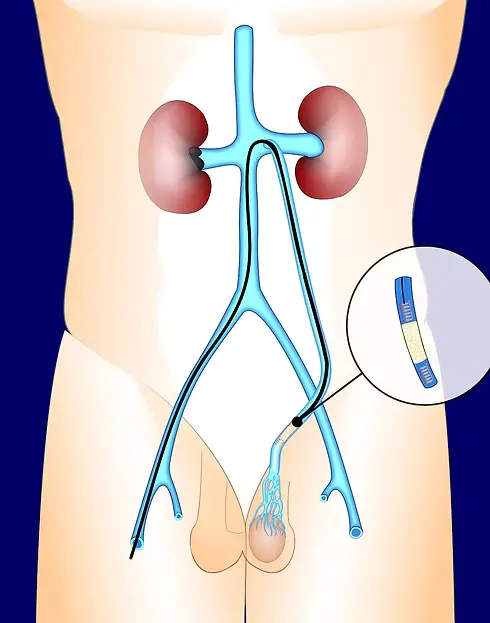
Varicocele embolization is a minimally invasive, image-guided procedure used to treat selected varicoceles.
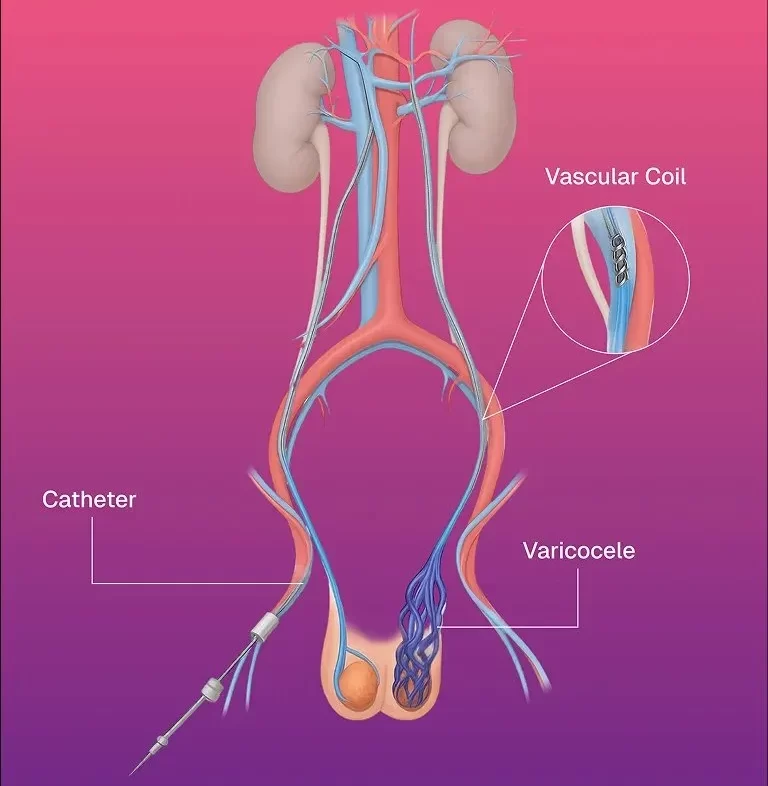
Instead of surgically tying off the enlarged veins, an interventional radiologist guides a thin catheter through a vein, usually accessed through a small puncture in the neck or groin.
Using X-ray guidance and contrast material, the specialist identifies the abnormal veins responsible for the varicocele. Small metal coils and/or an appropriate embolic agent are then placed to block the abnormal blood flow.
The blood is redirected through other healthy veins, allowing the treated veins to gradually shrink.
The procedure aims to relieve symptoms and may improve sperm quality in some men being treated for fertility concerns. The outcome depends on the individual patient’s condition.
Is varicocele embolization a minimally invasive procedure?
Yes. Varicocele embolization is performed through a small puncture in the skin rather than a conventional surgical incision.
The procedure is generally performed by an interventional radiologist in an imaging suite. Local anaesthesia is used at the access site, and sedation may be provided when appropriate.
Because the procedure does not require a surgical incision in the scrotum, recovery is often relatively quick. Many patients return home the same day.
However, embolization is still a medical procedure and carries potential risks. A specialist consultation is necessary to determine whether it is suitable for you.
Who is a good candidate for varicocele embolization?
Varicocele embolization may be considered for men with a clinically significant varicocele who experience:
- Persistent or recurrent scrotal discomfort or pain
- Fertility difficulties where the varicocele is considered a contributing factor
- A varicocele that requires treatment following specialist evaluation
- A recurrent varicocele after previous surgical treatment
- A preference for a minimally invasive alternative to conventional surgery, when clinically appropriate
Not every man with a varicocele needs treatment. Men without symptoms or fertility concerns may only require observation.
For men seeking fertility treatment, the decision should consider the physical examination, semen analysis, the couple’s fertility circumstances, and other possible causes of infertility.
How does Dr. Nanavati perform varicocele embolization?
Varicocele embolization uses image guidance to identify and block the veins responsible for the abnormal blood flow.
The procedure generally involves the following steps:
- Preparation: The patient is positioned on the procedure table. The access site, usually in the neck or groin, is cleaned and prepared under sterile conditions. Local anaesthesia is administered, and sedation may be used if needed.
- Catheter insertion: A small puncture is made in the skin, and a thin catheter is inserted into a vein.
- Image-guided navigation: Using X-ray guidance, the interventional radiologist carefully advances the catheter toward the affected testicular vein. Contrast material is injected to visualize the veins and identify the abnormal blood flow.
- Embolization: Small metal coils and/or another suitable embolic agent are placed within the targeted vein to block the abnormal blood flow.
- Completion of the procedure: The catheter is removed, and pressure is applied to the access site to prevent bleeding. A small dressing is placed over the puncture.
The patient is monitored for a period after the procedure before being discharged, provided recovery is satisfactory.
The procedure commonly takes around 45–60 minutes, although the duration can vary depending on the venous anatomy and complexity of treatment.
What are the benefits of varicocele embolization?
For appropriately selected patients, varicocele embolization may offer several benefits:
- Minimally invasive treatment: Requires only a small puncture rather than an incision in the scrotum.
- Short recovery: Many patients can resume light daily activities within a day, subject to medical advice.
- Pain relief: May reduce discomfort associated with the varicocele.
- Potential fertility benefits: Treatment may improve semen parameters in some men.
- Outpatient treatment: Many patients can return home on the same day.
- Alternative to surgery: May be suitable for patients who prefer a catheter-based approach or have a recurrent varicocele.
Results vary, and treatment does not guarantee pain relief, improved fertility, or pregnancy.
Is varicocele embolization safe? What are the possible risks?
Varicocele embolization is generally well tolerated, but complications can occur.
Possible risks include:
- Bruising, bleeding, or a small collection of blood at the catheter insertion site
- Temporary scrotal discomfort or lower-back pain
- Inflammation of a vein or surrounding structures
- Infection
- Allergic reaction to contrast material
- Injury to a blood vessel
- Movement of an embolization coil from its intended position, which is uncommon
- Persistent or recurrent varicocele
- Failure to complete the procedure if the abnormal vein cannot be accessed or treated successfully
Your specialist will discuss the potential benefits and risks based on your medical history, imaging findings, and treatment goals.
How long does it take to recover from varicocele embolization?
Recovery is usually relatively quick compared with many conventional surgical procedures.
Many patients can return to light daily activities within 24 hours, although mild discomfort around the treated area or catheter insertion site may persist for several days.
Recovery recommendations may include:
- Resting for the remainder of the day after the procedure
- Keeping the puncture site clean and following wound-care instructions
- Avoiding strenuous exercise and heavy lifting for the period recommended by the treating specialist
- Taking prescribed pain relief as directed
- Returning gradually to normal activities
- Attending follow-up appointments as advised
The timing for returning to work, exercise, and sexual activity depends on the patient’s recovery and the treating team’s instructions.
How soon can I see results after varicocele embolization?
The timing of improvement depends on why the procedure was performed.
Men treated for discomfort may notice improvement over the following days or weeks, although some discomfort can temporarily persist after the procedure.
For men undergoing treatment because of fertility concerns, changes in semen quality take longer to assess because sperm production occurs over several months. A follow-up semen analysis may be recommended by the treating specialist.
A successful technical procedure does not necessarily mean that all symptoms will disappear or that fertility will improve in every patient.
Does varicocele embolization improve fertility?
Varicoceles are associated with fertility problems in some men, but not every varicocele affects fertility.
In appropriately selected patients, treatment may improve sperm count, movement, or other semen parameters. Some couples may experience improved chances of conception, but pregnancy depends on multiple factors affecting both partners.
Embolization should not be presented as a guaranteed fertility treatment. Men experiencing difficulty conceiving should seek an appropriate fertility assessment and discuss the potential benefits, limitations, and alternatives with their healthcare providers.
Can a varicocele return after embolization?
Yes. A varicocele can persist or recur after embolization, just as it can after surgery.
Recurrence may occur if some abnormal veins remain open or if additional veins contribute to the abnormal blood flow.
If symptoms persist or return, your specialist may recommend a clinical examination and ultrasound. Depending on the findings, further treatment, including repeat embolization or surgery, may be considered.
What kind of follow-up care is typical after varicocele embolization?
Follow-up care depends on the patient’s symptoms and the reason for treatment.
Your healthcare provider may recommend:
- Checking the catheter insertion site and recovery
- Reviewing whether scrotal pain or discomfort has improved
- Further examination or ultrasound if symptoms persist or recur
- Semen analysis for patients undergoing treatment for fertility concerns
- Additional assessment if there is a change in testicular size or other new symptoms
Your specialist will advise you on the appropriate timing of follow-up visits and any additional tests needed.
Is varicocele embolization better than surgery?
Both embolization and surgery aim to stop abnormal blood flow through the enlarged veins. The best option depends on the patient’s anatomy, symptoms, fertility goals, previous treatment, and preferences.
Varicocele embolization
- Uses a catheter inserted through a small skin puncture
- Does not require a surgical incision in the scrotum
- Is usually performed by an interventional radiologist under image guidance
- Often allows a relatively quick return to light activities
- May be an option for recurrent varicoceles after surgery
Surgical varicocele repair
- Involves identifying and closing the affected veins through a surgical approach
- May be performed using microsurgical or laparoscopic techniques
- Has its own recovery requirements and potential complications
- May be recommended depending on the patient’s circumstances and the specialist’s assessment
Neither treatment is universally best for everyone. Discuss the expected benefits, risks, recurrence rates, recovery, and fertility considerations with your treating specialist before deciding.
Frequently asked questions about kyphoplasty
Is varicocele embolization a major surgery?
No. It is a minimally invasive, catheter-based procedure performed through a small skin puncture. However, it remains a medical procedure with potential complications.
How long does varicocele embolization take?
The procedure commonly takes around 45–60 minutes, although the duration can vary depending on the patient’s anatomy and the complexity of treatment.
Will I need to stay in the hospital overnight?
Many patients return home on the same day after an observation period. The need for an overnight stay depends on the patient’s condition and the treating team’s assessment.
Is varicocele embolization painful?
Local anaesthesia is used at the catheter insertion site, and sedation may be offered when appropriate. Mild discomfort may occur during recovery, but severe or worsening pain should be reported to a healthcare professional.
Can I return to work after embolization?
Many patients can resume light daily activities within 24 hours. The timing of return to work depends on the nature of the job, the patient’s recovery, and medical advice.
Does varicocele embolization affect testosterone levels?
The procedure is intended to treat abnormal venous blood flow, not directly to alter hormone levels. Individual testicular function varies, and men with concerns about testosterone should discuss appropriate testing with their healthcare provider.
Will the coils remain inside my body?
The embolization coils are intended to remain in the treated vein to block abnormal blood flow. They are not routinely removed after successful treatment.
Does every varicocele require treatment?
No. Many varicoceles do not cause symptoms or require treatment. Intervention is considered when symptoms, testicular changes, or fertility concerns justify treatment following a specialist assessment.