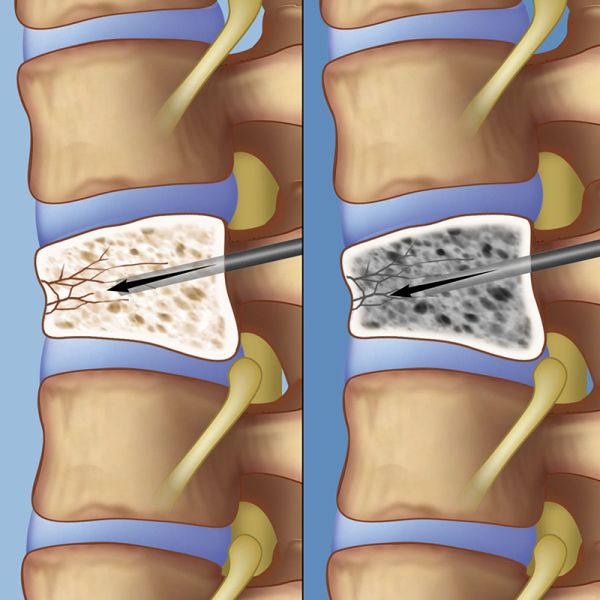
A vertebral compression fracture (VCF) occurs when one of the bones (vertebrae) in the spine becomes compressed or collapses. This can cause sudden or persistent back pain, reduced mobility, and changes in posture.
Vertebral Compression Fracture – Kyphoplasty
What is a vertebral compression fracture?
A vertebral compression fracture (VCF) occurs when one of the bones (vertebrae) in the spine becomes compressed or collapses. This can cause sudden or persistent back pain, reduced mobility, and changes in posture.
The most common cause is osteoporosis, a condition that weakens bones and makes them more likely to fracture. In people with weakened bones, a compression fracture may occur after a minor fall, bending, lifting an object, coughing, or even performing everyday activities.
Vertebral compression fractures can also result from significant spinal injuries or conditions that weaken the bone, including certain cancers.
What are the symptoms of a vertebral compression fracture?
Symptoms vary depending on the location and severity of the fracture. Some fractures cause few noticeable symptoms, while others can lead to significant pain and difficulty with daily activities.
Common symptoms include:
- Sudden or gradually developing back pain
- Pain that becomes worse when standing, walking, bending, or twisting
- Pain that improves when lying down
- Tenderness over the affected area of the spine
- Difficulty standing upright or moving comfortably
- Reduced mobility and difficulty performing everyday activities
- Loss of height over time
- A rounded or hunched upper-back posture in people with multiple fractures
Severe pain or new back pain after even a minor fall should be evaluated by a healthcare professional, especially in people with osteoporosis.
What causes vertebral compression fractures?
Vertebral compression fractures occur when the spine bone becomes unable to withstand the forces placed on it.
Common causes include:
- Osteoporosis: Weakening of the bones makes vertebrae more susceptible to fractures.
- Age-related bone loss: Bone density and strength can decrease with age.
- Spinal injury: A fall, accident, or other trauma can fracture a vertebra.
- Cancer involving the spine: Certain cancers can weaken the vertebral bones.
- Long-term use of certain medications: Prolonged corticosteroid use can contribute to osteoporosis and increase fracture risk.
What are the risk factors for vertebral compression fractures?
Several factors can increase the risk of a vertebral compression fracture:
- Older age
- Osteoporosis or low bone density
- Previous fractures, particularly vertebral fractures
- A family history of osteoporosis or fragility fractures
- Long-term corticosteroid use
- Certain cancers or conditions affecting bone strength
- Smoking and excessive alcohol consumption
- Low body weight or nutritional deficiencies that affect bone health
People with osteoporosis should discuss bone-health assessment and fracture-prevention strategies with their healthcare provider.
How is a vertebral compression fracture diagnosed?
Diagnosis usually begins with a review of the patient’s symptoms, medical history, and physical examination.
Imaging tests help confirm the fracture, determine its location, and assess whether it may be suitable for kyphoplasty.
Tests may include:
- X-rays: Help identify vertebral compression and changes in the shape or height of the vertebrae.
- Magnetic resonance imaging (MRI): Helps assess whether a fracture is recent or still active and can identify other possible causes of back pain.
- Computed tomography (CT): Provides detailed images of the bones and helps evaluate the fracture’s structure.
- Bone density testing: May be recommended to assess osteoporosis and the risk of future fractures.
The results help the treating specialist determine whether conservative treatment, kyphoplasty, or another approach is appropriate.
What is kyphoplasty?
Kyphoplasty, also known as balloon kyphoplasty, is a minimally invasive procedure used to treat selected painful vertebral compression fractures.
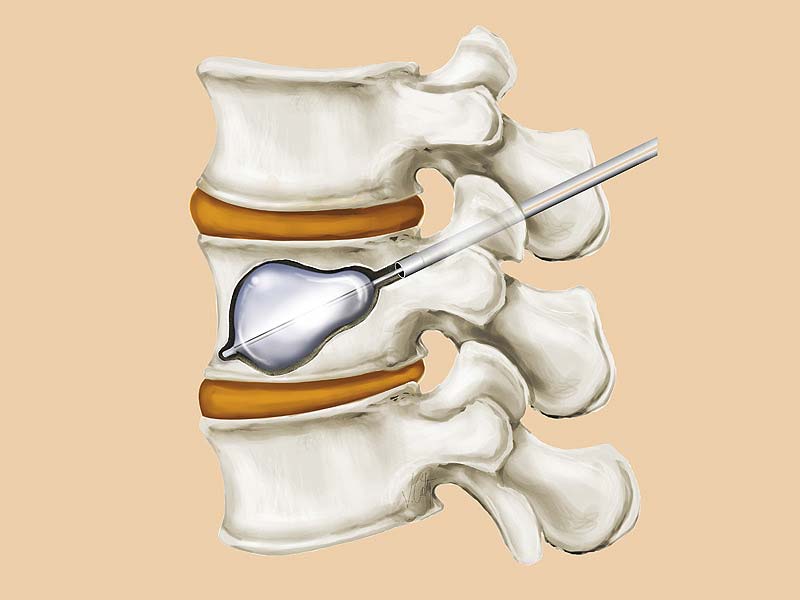
During the procedure, a small balloon is introduced into the fractured vertebra and gently inflated to create a space within the bone. The balloon is then removed, and special medical bone cement is injected into the space to stabilize the fractured vertebra.
The goal is to reduce fracture-related pain, stabilize the affected bone, and help the patient regain mobility.
Kyphoplasty is not necessary for every compression fracture. Many fractures improve with conservative treatment, and the procedure is generally considered when the patient’s symptoms, imaging findings, and overall health support its use.
Is kyphoplasty a minimally invasive procedure?
Yes. Kyphoplasty is performed through small skin punctures rather than a large surgical incision.
Using real-time X-ray guidance, the specialist directs instruments into the affected vertebra. A balloon is used to create a cavity, which is then filled with bone cement to provide stability.
Depending on the patient’s condition and the number of vertebrae being treated, the procedure may be performed with sedation or general anesthesia.
Many patients can return home on the same day, although some may require an overnight stay for observation.
Who is a good candidate for kyphoplasty?
Kyphoplasty may be considered for patients who have:
- A painful vertebral compression fracture confirmed by imaging
- Significant pain that limits walking, standing, sleeping, or other daily activities
- A recent or unhealed fracture that corresponds to the location of the pain
- Persistent symptoms despite appropriate non-surgical treatment
- A fracture related to osteoporosis or, in selected cases, another condition that has weakened the vertebral bone
The decision depends on the age and type of fracture, severity of symptoms, imaging findings, general health, and the potential benefits and risks of the procedure.
Kyphoplasty may not be appropriate for a fully healed fracture, pain caused by another spinal condition, or certain fractures involving significant spinal instability or pressure on the spinal cord. A specialist assessment is essential.
How does Dr. Nanavati perform kyphoplasty?
Kyphoplasty is performed using image guidance to help place the instruments accurately within the fractured vertebra.
The procedure generally involves the following steps:
- Preparation: The patient is positioned on the procedure table, usually lying face down. The treatment area is cleaned, and anesthesia or sedation is administered as planned.
- Image guidance: X-ray imaging helps the specialist identify the affected vertebra and guide the instruments into the correct position.
- Small skin puncture: A needle-like instrument is carefully passed through the skin and into the fractured vertebra.
- Balloon placement: A small balloon is introduced and inflated within the vertebra to create a cavity and, in selected cases, help restore some of the lost vertebral height.
- Bone cement injection: The balloon is removed, and medical bone cement is injected into the cavity under imaging guidance.
- Stabilization: The cement hardens, helping stabilize the fractured vertebra. The instruments are removed, and the small puncture site is covered.
The procedure is intended to stabilize the fracture and relieve pain associated with it. The degree of pain relief and any restoration of vertebral height vary from patient to patient.
What are the benefits of kyphoplasty?
For appropriately selected patients, kyphoplasty may offer several benefits:
- Relief from pain caused by a vertebral compression fracture
- Improved ability to stand, walk, and perform daily activities
- Stabilization of the fractured vertebra
- A minimally invasive alternative to open spinal surgery for selected fractures
- Small skin punctures rather than a large surgical incision
- Potentially shorter recovery compared with more extensive surgery
- Possible improvement in mobility and quality of life
Results vary, and kyphoplasty cannot guarantee complete pain relief or prevent all future spinal fractures.
Is kyphoplasty safe? What are the possible risks?
Kyphoplasty is generally considered a minimally invasive procedure, but it has potential risks and complications.
These may include:
- Infection
- Bleeding or bruising at the puncture site
- Pain or soreness after the procedure
- Leakage of bone cement outside the vertebra
- Nerve irritation or injury if cement or bone material affects nearby structures
- Rare breathing or cardiovascular complications associated with anesthesia
- Additional vertebral compression fractures in the future
Cement leakage does not always cause symptoms, but leakage into the spinal canal or blood vessels can occasionally lead to serious complications.
Before treatment, the specialist will review the patient’s medical history, imaging, medications, and individual risk factors to determine whether the expected benefits outweigh the risks.
What is the recovery like after kyphoplasty?
Recovery varies depending on the patient’s age, general health, fracture severity, and the number of vertebrae treated.
Many patients are monitored for a few hours after the procedure and may be able to walk and return home on the same day.
Some patients notice a reduction in fracture-related pain soon after treatment, while others improve more gradually.
Recovery recommendations may include:
- Gradually resuming light daily activities as advised
- Avoiding heavy lifting, strenuous exercise, and excessive bending or twisting until cleared by the treating specialist
- Following instructions for wound care and pain management
- Attending scheduled follow-up appointments
- Discussing physical therapy or rehabilitation if needed
Contact the treating healthcare professional promptly if pain worsens significantly or if fever, increasing redness, drainage, new numbness, or weakness develops. New leg weakness, loss of bladder or bowel control, or numbness around the groin requires emergency medical assessment.
How long does it take to feel better after kyphoplasty?
Some patients experience noticeable pain relief within hours or days, while others take longer to improve.
The timing depends on whether the pain is primarily caused by the treated fracture or by other conditions, such as arthritis, disc disease, or nerve compression.
Your specialist can provide a more individualized recovery estimate after reviewing your imaging and medical history.
What kind of follow-up care is needed after kyphoplasty?
Follow-up care helps assess pain relief, mobility, healing, and any complications.
Your healthcare provider may recommend:
- A review of symptoms and physical function
- Examination of the puncture site
- Further imaging if symptoms persist or new concerns arise
- Guidance on gradually returning to normal activities
- Assessment and treatment of osteoporosis, if present
- Measures to reduce the risk of future fractures, including appropriate medication, nutrition, exercise, and fall prevention
Follow-up timing should be individualized according to the patient’s condition and the treating specialist’s recommendations.
Can vertebral compression fractures be prevented?
Not all vertebral compression fractures can be prevented, but steps can help reduce the risk, particularly for people with osteoporosis.
These include:
- Evaluating and treating osteoporosis
- Ensuring adequate calcium and vitamin D intake as advised by a healthcare professional
- Participating in appropriate weight-bearing and strength-building exercise
- Improving balance and reducing fall hazards at home
- Avoiding smoking and limiting alcohol consumption
- Reviewing medications that may affect bone health with a healthcare provider
Preventing future fractures is an important part of long-term care, even after successful treatment of an existing fracture.
Is kyphoplasty better than conservative treatment?
There is no single treatment that is best for every vertebral compression fracture.
Many fractures improve with non-surgical management, which may include pain medication, temporary activity modification, a brace when appropriate, and rehabilitation.
Kyphoplasty may be considered when a confirmed fracture continues to cause significant pain and limits function despite appropriate treatment, or when a specialist determines that earlier intervention is warranted.
The decision should be based on the patient’s symptoms, imaging findings, overall health, and a balanced discussion of the benefits, limitations, and risks of each option.
What is the difference between kyphoplasty and vertebroplasty?
Both procedures use bone cement to stabilize selected painful vertebral compression fractures.
- Kyphoplasty: A balloon is first inserted into the fractured vertebra to create a cavity. The balloon is removed before bone cement is injected.
- Vertebroplasty: Bone cement is injected directly into the fractured vertebra without first creating a cavity using a balloon.
Both are minimally invasive procedures, but they differ in technique and in how the cement is introduced. The most appropriate option depends on the fracture and the patient’s clinical circumstances.
Frequently asked questions about kyphoplasty
Is kyphoplasty a major surgery?
Kyphoplasty is minimally invasive and uses small skin punctures rather than a large incision. It is not the same as open spinal surgery, although it remains a medical procedure with potential risks.
How long does the kyphoplasty procedure take?
The procedure often takes less than an hour for a straightforward case, but the total time may be longer depending on the number of vertebrae treated, the complexity of the fracture, and preparation and recovery requirements.
Will kyphoplasty relieve my back pain?
Kyphoplasty may relieve pain caused by a suitable vertebral compression fracture. However, pain arising from other spinal conditions may persist, and complete pain relief cannot be guaranteed.
Can kyphoplasty restore the height of a collapsed vertebra?
The balloon may help restore some of the lost vertebral height in selected cases. The amount of restoration varies, and full restoration of the original vertebral shape is not guaranteed.
Can I walk after kyphoplasty?
Many patients can begin walking after the initial recovery and observation period, subject to the treating team’s instructions and their individual condition.
Can a compression fracture heal without kyphoplasty?
Yes. Many vertebral compression fractures improve with conservative treatment over several weeks or months. Kyphoplasty may be considered when pain remains significant and the fracture meets the clinical criteria for treatment.
Does kyphoplasty prevent future fractures?
No. Kyphoplasty stabilizes the treated vertebra but does not cure osteoporosis or eliminate the risk of fractures elsewhere in the spine. Bone-health assessment and appropriate preventive treatment remain important.
When should I seek urgent medical attention for back pain?
Seek emergency assessment for new leg weakness, loss of bladder or bowel control, or numbness around the groin or saddle area. Severe or rapidly worsening back pain, particularly after an injury, also warrants prompt medical evaluation.
Considering kyphoplasty for a vertebral compression fracture?
An assessment by an appropriately qualified specialist can help determine the cause of your back pain and whether kyphoplasty or another treatment is suitable for you.
Related Articles: